
Last updated September 10, 2026
Full 25-point door and opener safety check with every visit - springs, cables, rollers, tracks, and your LiftMaster or Chamberlain opener included
You get a price before we start. It does not change when the truck arrives.

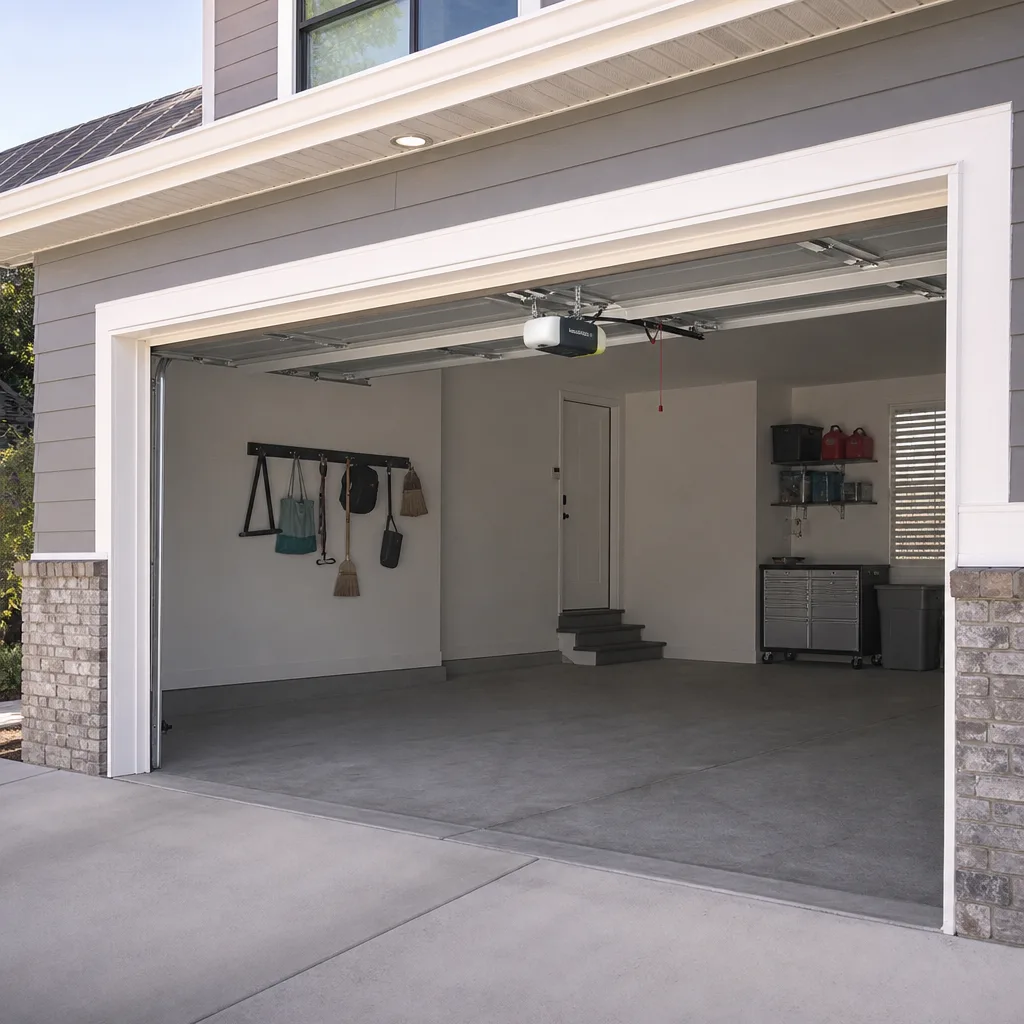
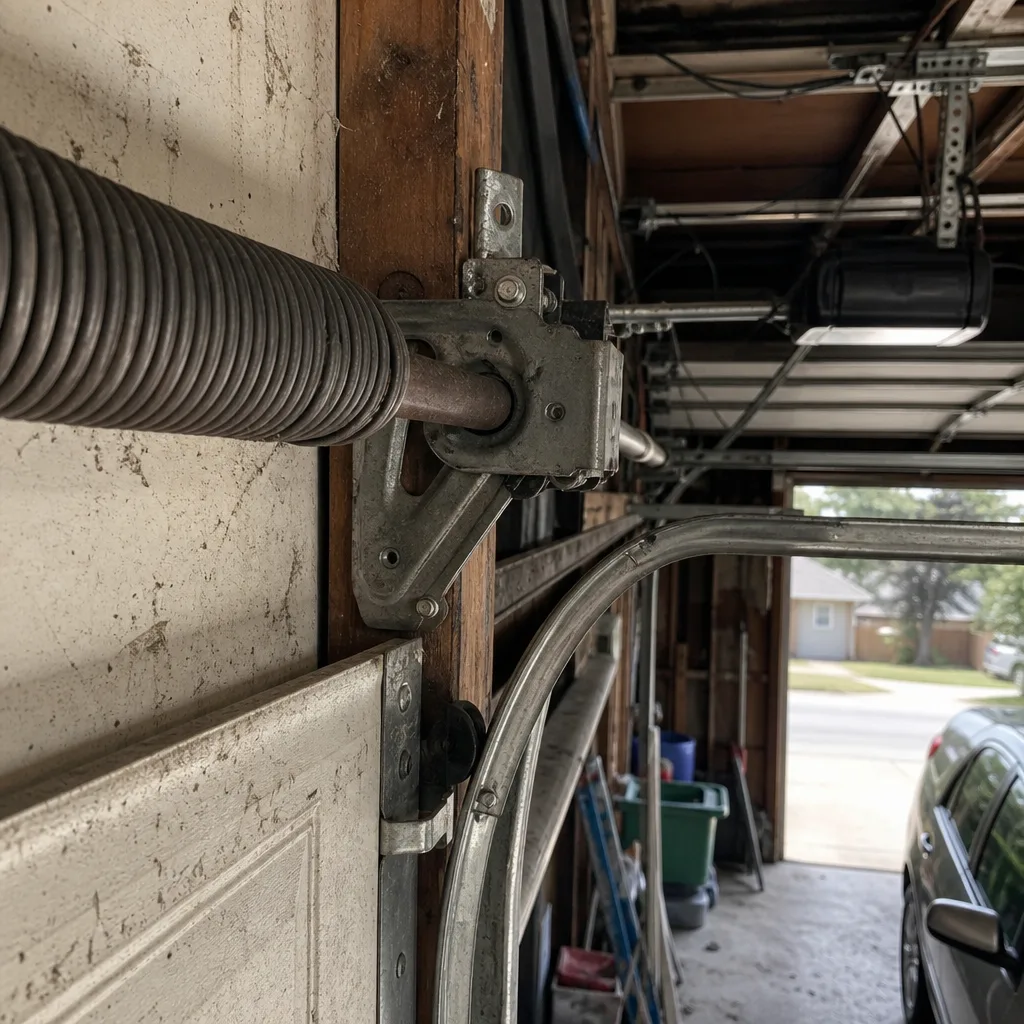 Before
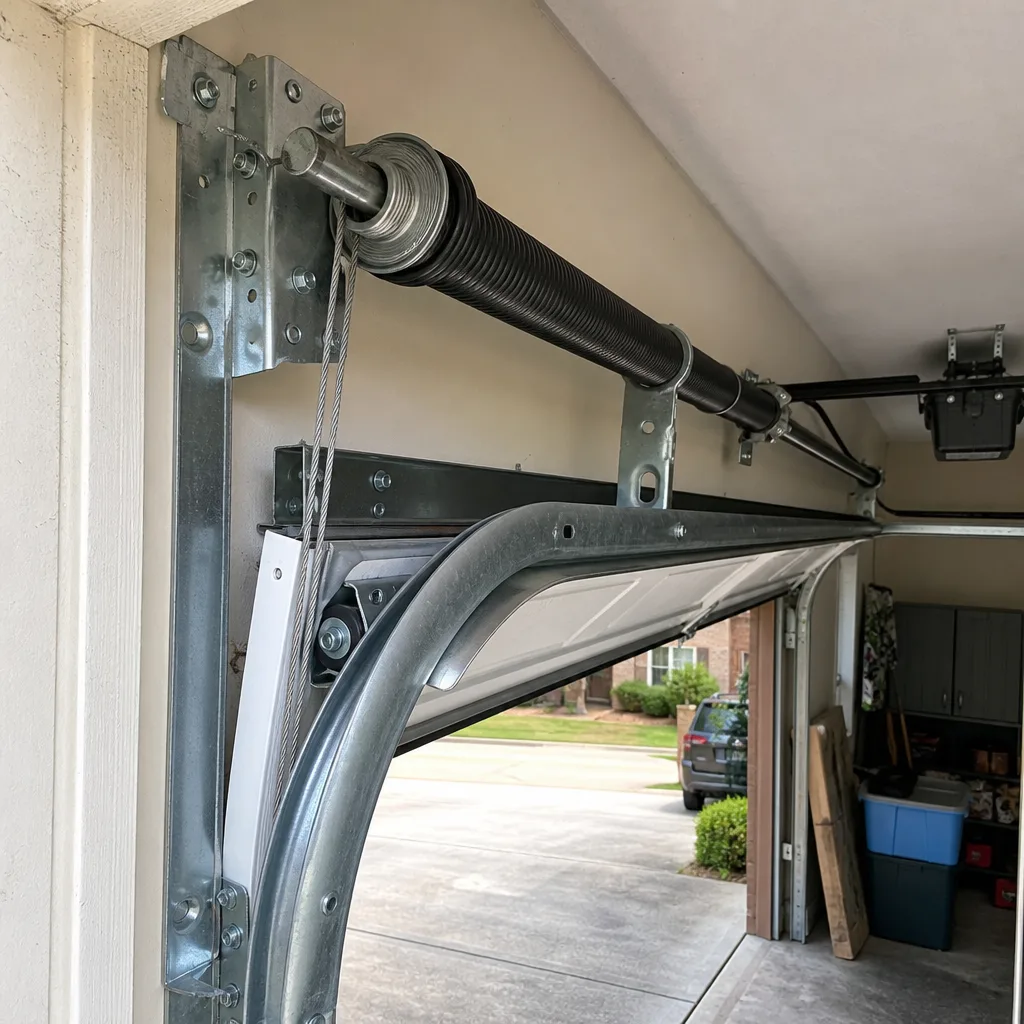 After
After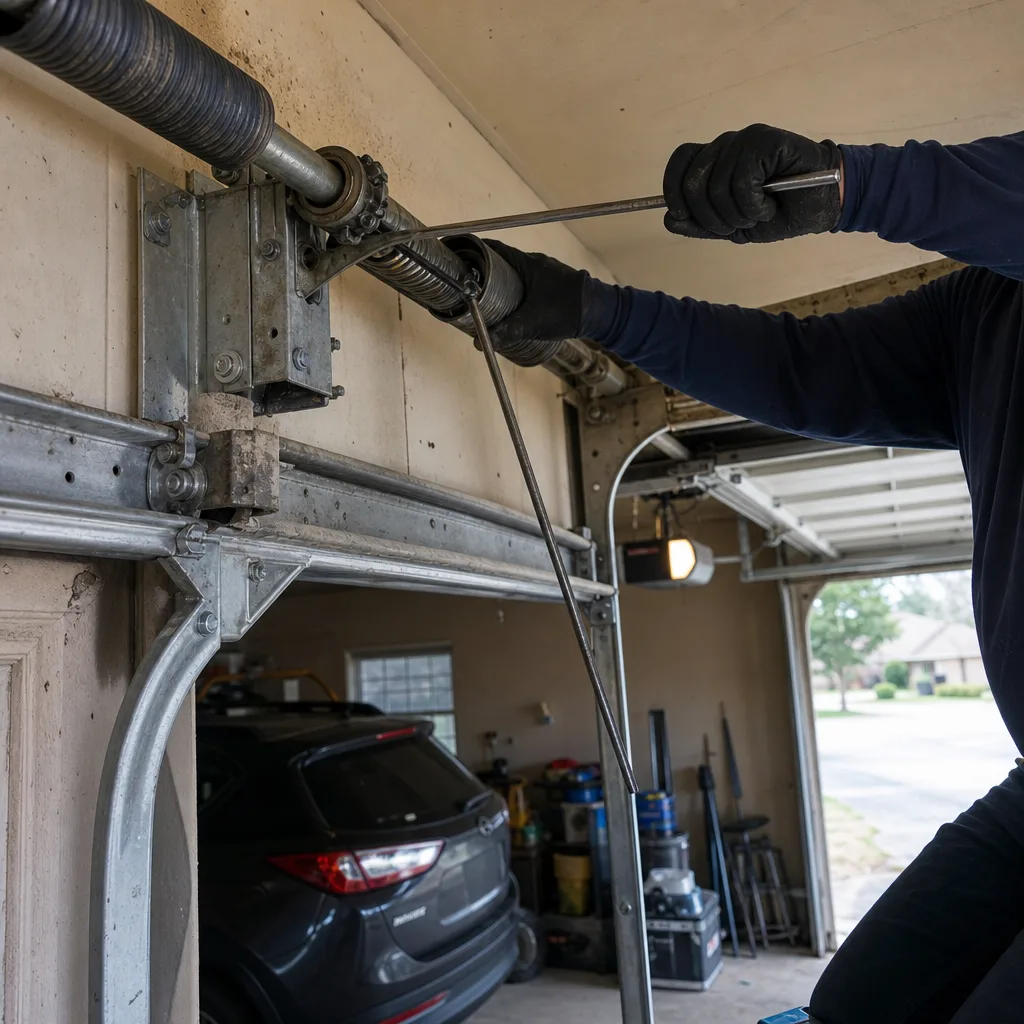 Before
 After
After Before
 After
AfterGarage Door Permits, Codes & Inspections in TX: What You Need to Know
Here is something most Spring homeowners discover too late: an unpermitted garage door replacement can flag a home’s title during a sale. Not because of the door itself, but because the electrical work tied to the new opener was never inspected. We have seen it happen in neighborhoods like Gleannloch Farms and Windrose, where sellers learned at closing that their $3,000 door upgrade needed a retroactive permit that cost nearly as much in fees and delays. This guide explains exactly when Texas building code requires a permit for garage door work, how Harris County and Montgomery County handle inspections differently, and why skipping the paperwork can turn a simple upgrade into a title problem. For more guides & resources, see our blog.
Quick Answer
In Texas, a building permit is required for any garage door installation that involves new electrical circuits, structural modifications to the opening, or changes to the home’s egress. A straight swap of an existing door on the same tracks typically does not require a permit, but adding a new opener circuit or widening the opening always does. Inspections verify electrical grounding, wind-load rating compliance, and proper safety sensor placement.
Table of Contents
- When Texas Code Requires a Permit for Garage Door Work
- Door Replacement vs. Structural Alteration: What Inspectors Look For
- Harris County vs. Montgomery County: How Permit Jurisdiction Works in Spring
- What Garage Door Inspections Actually Cover
- Why Opener Electrical Work Triggers a Rough-In Inspection
- How to Request a Retroactive Permit for Unpermitted Work
- Common Mistakes to Avoid
- When to Call a Professional
- Frequently Asked Questions
- The Bottom Line
When Texas Code Requires a Permit for Garage Door Work
Texas adopts the International Residential Code (IRC) Chapter 3 with local amendments, and most jurisdictions interpret it the same way: if the work changes the structure, the electrical system, or the egress of the home, you need a permit. If you are simply removing an old door and hanging a new one on the same hardware, you generally do not.
The confusion starts because most homeowners do not know where the line sits. Here is how building departments in the Spring area typically classify garage door work:
- No permit required: Straight door replacement on existing tracks with no opener changes. The opening dimensions stay the same, and no new wiring is run.
- Permit required: New opener installation with a dedicated 120V circuit, door relocation to a different wall, widening or narrowing the opening, converting a window or carport into a garage door opening, or any work affecting the header or load-bearing framing.
- Permit sometimes required: Converting from a one-piece tilt-up door to a sectional roll-up door. Some inspectors treat this as a change in operating mechanism that affects egress; others do not. We always recommend calling the local building department before starting.
The 2021 IRC, adopted by most Texas jurisdictions with 2024 amendments, specifically requires permits for “alterations, repairs, and additions” that affect structural members or electrical systems. A garage door opener draws significant amperage, especially older Chamberlain or Genie units with DC motors and battery backup systems. Running a new 20-amp circuit to the opener location qualifies as electrical work requiring inspection.
Spring’s climate adds another layer. Our area sits in a high-wind zone, with design wind speeds of 120 mph per ASCE 7-16. Garage doors must carry a wind-load sticker showing compliance. Inspectors in Montgomery County have started checking these stickers more carefully since the 2024 code cycle, particularly in newer developments like Harmony and Spring Trails where homes back onto open fields with full wind exposure.
Door Replacement vs. Structural Alteration: What Inspectors Look For
Building inspectors do not care about the brand of door you chose. They care about whether the work changed the building envelope in a way that affects safety, structural integrity, or egress. Understanding the distinction saves time and money.
Door replacement (typically no permit): You remove a 16×7 Clopay steel door and install a new 16×7 Clopay steel door on the same tracks, using the same opener. The header, jambs, and spring system remain unchanged. This is maintenance, not construction.
Opening modification (permit required): You widen a single-car opening to fit a two-car door, or raise the header height to accommodate a lift kit for a taller vehicle. The framing changes, which means the load path changes. An engineer may need to specify a new header size.
Structural alteration (permit and engineering required): You are removing a load-bearing wall between the garage and living space, or converting a garage into living space and replacing the door with a window wall. This triggers full plan review.
In our 42 years of work across Spring, we have noticed a pattern. Homes built between 1985 and 2005 often have 2×10 or 2×12 headers above garage doors that are barely adequate for current snow and wind loads. When a homeowner wants to upgrade to a heavier insulated door, the additional 80 to 120 pounds can stress that header. A sharp inspector will check for sag or cracking. We have had jobs in the Lexington Woods area where we discovered header failure only after the old door came down, turning a same-day replacement into a structural repair with permit and engineering requirements. These are the kinds of Garage Door Warning Signs: A Spring Homeowner’s Reference Guide that every homeowner should watch for.
The practical takeaway: if your home was built before 2010 and you are upgrading from a non-insulated steel door to a thick insulated model, have the header checked. The weight difference is substantial, and the header may not have been sized for it.
Harris County vs. Montgomery County: How Permit Jurisdiction Works in Spring
Spring straddles two counties, and the permit process differs depending on which side of the line your property sits. This catches homeowners off guard because the mailing address says “Spring” either way.
Montgomery County (unincorporated Spring): The Montgomery County Engineer’s Office handles permits for unincorporated areas. Their residential building permit application requires a site plan, contractor registration, and proof of insurance. Garage door work tied to electrical requires a separate electrical permit through the county’s contractor licensing division. Inspection scheduling is online, with next-day availability typical. Fees run approximately $75 to $150 for residential garage door permits depending on valuation.
Harris County (unincorporated Spring): Harris County Public Infrastructure uses a unified permit system. Residential garage door permits fall under the “repair/alteration” category if under $5,000 valuation, which simplifies paperwork. Electrical work still requires a separate permit and inspection through Harris County’s electrical division. One quirk: Harris County requires contractor registration for any job over $1,000, which catches handymen and unlicensed operators.
Incorporated areas: If you live within Houston city limits, Jersey Village, or Tomball, you follow that municipality’s process. Houston requires permits for all garage door opener electrical work and enforces it through third-party plan review. Jersey Village uses Harris County’s system with additional floodplain checks.
The county line runs roughly along Spring-Cypress Road and Kuykendahl. If you are unsure which county you are in, the Montgomery County Appraisal District and Harris County Appraisal District websites have parcel lookup tools. We always verify jurisdiction before starting work in Spring, because pulling the wrong permit wastes a week.
A specific note for Spring homeowners in gated communities like Augusta Pines or Miramar Lake: your HOA may require architectural review in addition to the county permit. The permit gets you legal compliance; the HOA approval keeps you from getting a violation letter. Do both, and do them in the right order. Most HOAs want approved plans before the permit application.
What Garage Door Inspections Actually Cover
When an inspector arrives for a garage door rough-in or final inspection, they are not checking whether the door looks straight or the paint matches. They are verifying code compliance in specific, technical areas. Knowing what they check helps you prepare and pass on the first visit.
Structural inspection items:
- Header size and bearing: The header must be properly sized for the span and load, with adequate bearing on each jack stud. Minimum bearing is typically 1.5 inches per IRC R602.7.
- Jack and king stud configuration: The inspector counts studs and checks that jacks extend to the sole plate without splices.
- Wind-load rating sticker: The door must display a permanent label showing the design pressure rating. In Spring’s 120 mph wind zone, this is non-negotiable.
- Impact rating (if applicable): Doors in wind-borne debris regions require impact-resistant glazing or shutters. Most of Spring is outside the strict debris region, but properties east of I-45 may trigger this requirement.
Electrical inspection items:
- Dedicated circuit: The opener must be on a dedicated 15 or 20-amp branch circuit, not shared with garage receptacles or lights per NEC 210.11(C)(4).
- GFCI protection: All garage receptacles, including the opener outlet, require GFCI protection. Since the 2023 NEC adoption in Texas, this includes 240V circuits if used for openers.
- Disconnecting means: A means of disconnect must be within sight of the opener motor. Many installers miss this and rely on the breaker panel, which is often not within sight.
- Grounding and bonding: The opener chassis must be grounded, and any metallic door tracks properly bonded if they become energized.
Safety system verification:
- Photo-eye alignment and height: Sensors must be mounted 6 inches or less above the floor per UL 325. Inspectors often bring a tape measure.
- Force setting test: The door must reverse when contacting a 2×4 laid flat on the floor. This tests both the opener force settings and the mechanical balance.
- Entrapment protection: All openers manufactured after 1993 must have external entrapment protection. Inspectors check the manufacture date on the motor unit.
In Spring, electrical inspectors are particularly strict about GFCI protection because of our clay soils and high groundwater. Ground faults are a real hazard in garages where concrete floors stay damp for days after rain. We have had inspectors fail jobs in the Creekside area because the GFCI was installed but not tested, or because the test button was stuck from construction dust.
Why Opener Electrical Work Triggers a Rough-In Inspection
The rough-in inspection is the inspection most homeowners never hear about until they need it. It happens before the walls are closed, when the inspector can see the wiring, boxes, and conduit. For garage door openers, this matters because the alternative is tearing out finished drywall to prove the work was done right.
Here is why the rough-in exists and what it protects:
Insurance coverage verification: Homeowner’s insurance policies contain a clause about “work performed to code.” If a fire starts at an improperly wired opener and the insurer discovers no permit or inspection, they may deny the claim. We have seen this in claim disputes where the adjuster requests permit records. No permit means no proof of code compliance, which shifts liability to the homeowner.
Ground fault protection: The 2020 NEC, adopted by Texas with 2023 amendments, expanded GFCI requirements for garage circuits. A rough-in inspection verifies the GFCI is installed at the correct location, not just present somewhere in the circuit. This matters because a GFCI at the breaker panel does not protect the wiring run to the opener if a fault occurs in the wall.
Arc-fault protection: Newer LiftMaster and Chamberlain openers with battery backup and Wi-Fi modules draw standby current that can mask arc faults. The rough-in inspection verifies AFCI breaker compatibility, which prevents nuisance tripping that leaves your garage unsecured.
Grounding electrode: If the garage is detached, the rough-in inspection checks for a separate grounding electrode system. Spring’s lightning frequency, among the highest in the nation, makes this critical. A detached garage with a metal door and ungrounded opener becomes a shock hazard during storms.
The rough-in inspection typically covers: wire gauge and type (NM-B in walls, THHN in conduit), box fill calculations, staple spacing within 12 inches of boxes, cable protection plates, and proper connector types. The final inspection, done after drywall and door installation, verifies the GFCI functions, the disconnect is accessible, and the safety reverse works.
Skipping the rough-in and going straight to final almost guarantees a fail. The inspector cannot see what is behind the wall. In Spring, both Montgomery and Harris counties charge a re-inspection fee, usually $50 to $100, and you go to the back of the scheduling queue.
How to Request a Retroactive Permit for Unpermitted Work
If you are selling a home and the title company flags unpermitted garage door work, or if you discover a previous owner skipped permits, the retroactive permit process is your path to clean title. It is more involved than a standard permit, but it is far better than a buyer walking away.
Step 1: Gather documentation. Collect any records of the work: receipts, photos, contractor information, product labels showing wind-load ratings. If the work was done by a previous owner, check with neighbors or the HOA for contractor names.
Step 2: Contact the correct jurisdiction. Determine whether Montgomery County, Harris County, or a municipality has authority. Explain that you need a retroactive permit for completed work. They will assign a case number and tell you which inspections are required.
Step 3: Expose the work for inspection. This is the painful part. The inspector needs to see what is behind the drywall. For electrical, this may mean cutting access holes near the opener outlet and at the panel. For structural work, header exposure may be required. Some jurisdictions accept thermal imaging or borescope video in lieu of full exposure, but do not count on it.
Step 4: Correct any deficiencies. The inspector will issue a correction notice if anything does not meet current code. Note that retroactive permits are typically held to current code, not the code in effect when the work was done. This can mean upgrading GFCI protection, adding AFCI breakers, or reinforcing headers that were acceptable in 2005 but not today.
Step 5: Final inspection and certificate of completion. Once corrections are made, schedule final inspection. Upon passing, you receive a certificate of completion or correction letter that the title company accepts as resolution.
In the Spring area, retroactive permit fees run higher than standard permits. Montgomery County charges a base fee plus 1.5x the standard permit fee for retroactive applications. Harris County adds a $200 administrative surcharge. Total costs typically range from $300 to $800 depending on the scope, plus contractor costs for any required corrections. Timeline is 2 to 6 weeks if no major corrections are needed.
We handled a retroactive permit in the Auburn Lakes area last year where the previous owner had installed a LiftMaster 8500W wall-mount opener on a new circuit without permits. The buyer’s lender required documentation. We exposed the wiring, added a missing disconnect switch, upgraded the breaker to AFCI, and passed inspection in three weeks. The seller paid roughly $650 in county fees and our correction labor, but the sale closed on schedule.
The key lesson: if you are planning to sell within five years and your garage door work involved electrical or structural changes, pull the permit now. Retroactive permits cost more and create delays that can kill a deal.
Common Mistakes to Avoid
- Assuming a “like-for-like” replacement never needs a permit. If your old opener was hardwired and the new one needs a receptacle, that receptacle installation requires electrical inspection. The door may be identical; the electrical work is not.
- Letting an unlicensed contractor pull the permit in their name. If they disappear, you have no recourse. In Spring, verify contractor registration through the county’s online lookup before work starts.
- Ignoring the wind-load sticker. Inspectors in Montgomery County have rejected doors with stickers that are illegible or applied to removable trim rather than the door section itself. The sticker must be permanent and visible.
- Skipping the rough-in to save time. One Spring homeowner we worked with in the Panther Creek area had their drywall contractor finish the garage before electrical inspection. The re-inspection with access cuts added $400 and two weeks to the project.
- Not checking HOA requirements before permitting. An approved county permit does not override an HOA architectural violation. We have seen homeowners get both permits and then receive HOA fines for unapproved door styles.
- Failing to request a final inspection. Some contractors call the job done after rough-in passes. Without final inspection, the permit never closes, and the work remains uncompleted in county records. This surfaces at sale exactly like an open permit.
- Assuming previous owner permits transferred. Permits run with the property, but only if they were properly closed. An open permit from 2018 is still open. Always request a permit history report before buying in Spring.
When to Call a Professional
Call a licensed garage door contractor when the work involves anything beyond a straight door swap on existing hardware. Not sure how to choose? Read our How to Hire a Garage Door Contractor in Spring: A Step-by-Step Guide first. Specifically: new electrical circuits, header or framing changes, wind-load rating verification, or any situation where you need permit drawings and inspection scheduling.
At Mainspring Garage Door Co., we handle permit research, application, and inspection scheduling as part of our installation process for Spring homeowners. We have worked with Montgomery and Harris County building departments for decades, and we know which inspectors want what documentation. Our trucks carry the common parts needed to correct deficiencies on the spot, so most jobs finish in a single visit.
We also provide free second opinions on any written estimate, including permit cost breakdowns from other contractors. If you are unsure whether your project needs a permit, call us at (936) 280-5668. We will tell you straight, with no pressure to hire us for the work.
Frequently Asked Questions
A straight replacement of an existing door on the same tracks typically does not require a permit in Spring. You need a permit if the work includes new electrical circuits for an opener, changes to the opening size, or modifications to structural framing. Call Montgomery County or Harris County building departments to confirm jurisdiction for your address.
Standard residential garage door permits run $75 to $150 in Montgomery County and $80 to $160 in Harris County, depending on project valuation. Retroactive permits cost 1.5 to 2 times the standard fee plus administrative surcharges. Electrical permits are separate and typically add $50 to $100. Call (936) 280-5668 for help estimating total permit costs for your specific project.
Yes, if the unpermitted work included electrical or structural changes. Title companies flag open or missing permits because they create liability for the new owner. Lenders may require permit clearance before funding. The fix is a retroactive permit, which costs more and takes longer than doing it right the first time.
The inspector issues a correction notice listing specific deficiencies. You have a set period, usually 30 days, to make corrections and schedule re-inspection. Re-inspection fees apply in both Montgomery and Harris counties. At Mainspring, we correct most deficiencies same-day because our trucks carry the necessary parts and materials.
Yes, if you are running a new circuit or adding a receptacle for the opener. The electrical permit triggers a rough-in inspection and a final inspection. In Spring, this is required even for replacement openers if the old unit was hardwired and the new one requires a receptacle. The electrical work must comply with NEC 210.11(C)(4) for dedicated garage circuits.
Check for a permanent wind-load rating sticker on the door, usually on the interior face of an end section. The sticker shows the design pressure rating in PSF. For Spring’s 120 mph wind zone, your door must meet or exceed the rating on your home’s original construction documents. If the sticker is missing or illegible, a structural engineer or certified garage door contractor can determine compliance. We verify this on every installation we perform in Spring.
The Bottom Line
Texas garage door permits are not about bureaucracy. They are about proving that the work was done right, that your insurance will pay if something goes wrong, and that your title will clear when you sell. The rules are straightforward: same door, same tracks, no new electrical - usually no permit. Anything beyond that, and the permit protects you more than it costs.
In Spring, the county line complicates jurisdiction, and our wind zone adds requirements that other Texas markets skip. The homeowners who fare best are the ones who verify requirements before work starts, keep documentation organized, and close every permit with final inspection. The ones who struggle are those who learn about permits from a title company at closing.
If you are planning garage door work and want to know exactly what permits your project requires, Mainspring Garage Door Co. will research it at no charge. We have served Spring since 2016, and we have navigated these processes for hundreds of homeowners. No surprises on the bill, no open permits at closing, and a 90-Day Done Right Promise on every job we complete.
Written by Carl Dutton, Owner at Mainspring Garage Door Co., serving Spring since 2016.