
Last updated September 10, 2026
Full 25-point door and opener safety check with every visit - springs, cables, rollers, tracks, and your LiftMaster or Chamberlain opener included
You get a price before we start. It does not change when the truck arrives.

 Before
 After
After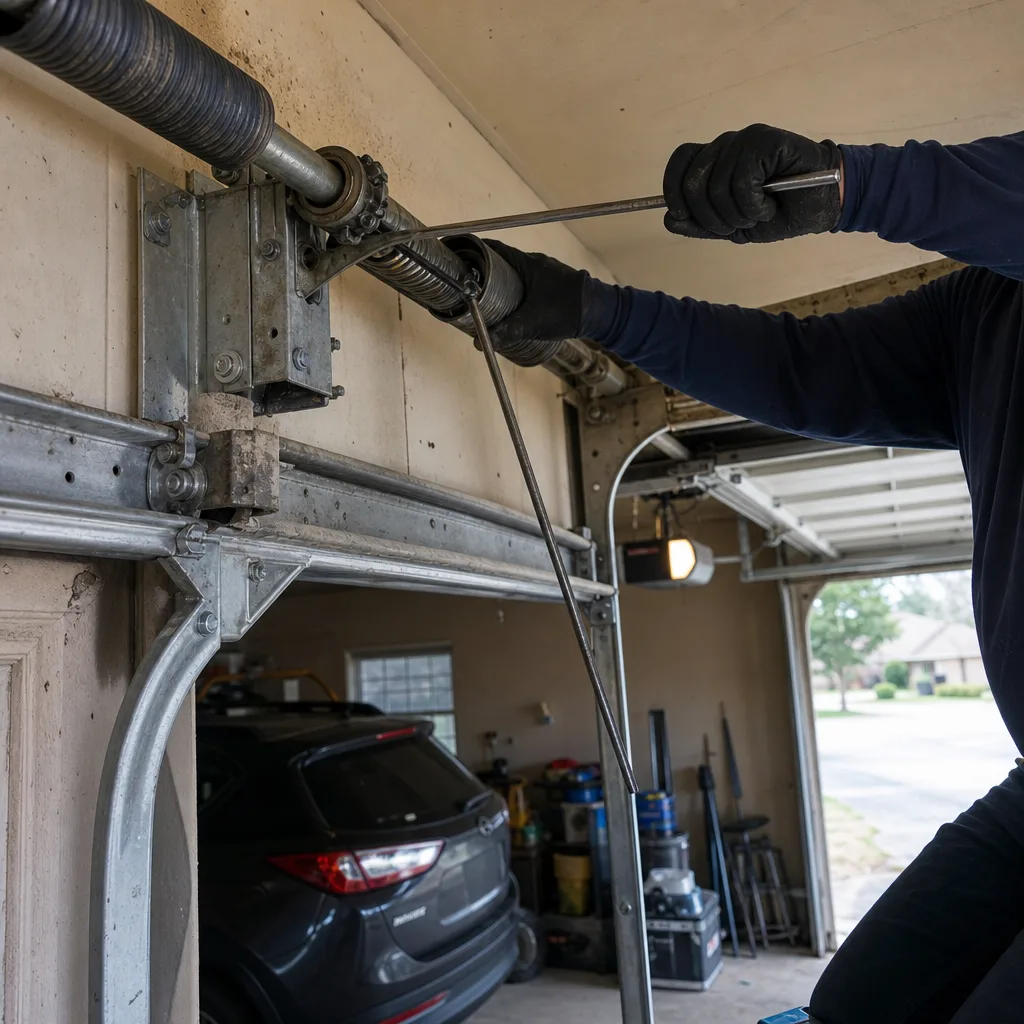 Before
 After
After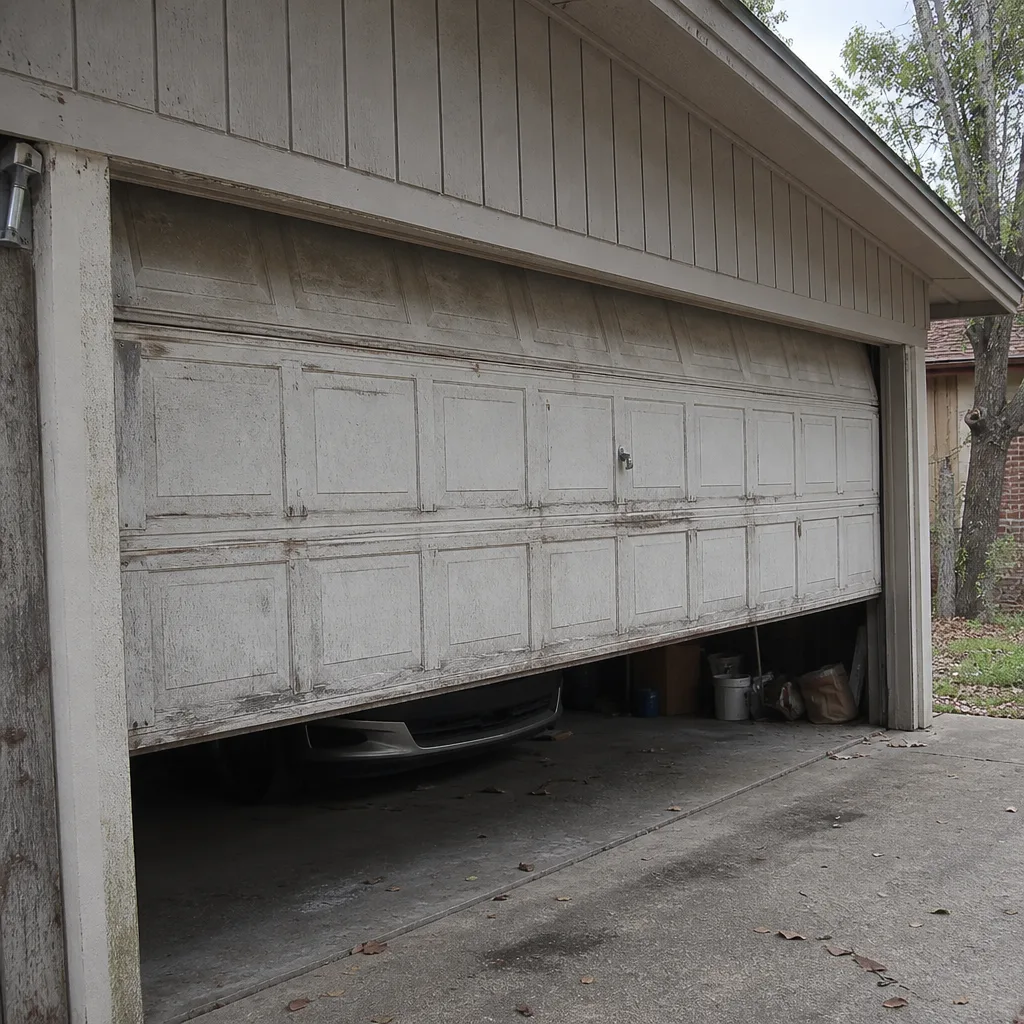 Before
 After
AfterGarage Door Repair Maintenance Checklist for Spring Homeowners
Most emergency garage door calls we answer in Spring are caused by skipped lubrication, a task that takes four minutes and costs under five dollars. The majority of homeowners we meet in neighborhoods like Gleannloch Farms and Augusta Pines have never been shown what to look for, so small problems compound until a spring snaps at 6 a.m. or the door jams before a doctor’s appointment. This checklist follows the actual failure sequence we’ve watched unfold across 42 years in this trade, not a generic list designed to sell you a contract.
Quick Answer
A proper garage door maintenance checklist for Spring homeowners includes monthly visual inspections of rollers, cables, and springs; quarterly lubrication of hinges, rollers, and the opener rail with silicone or lithium-based grease; annual testing of auto-reverse sensors and bottom seal integrity; and Garage Door Repair services for a professional tune-up every 12-18 months. In Spring’s humid Gulf Coast climate, the wrong lubricant attracts dust and moisture, accelerating the wear cycle that starts with degraded rollers and ends with a broken torsion spring.
Table of Contents
- The Failure Sequence: How a $30 Problem Becomes a $400 Repair
- Monthly Visual Inspection: The Four-Minute Check
- What to Lubricate, What to Leave Alone, and What the Humidity Destroys
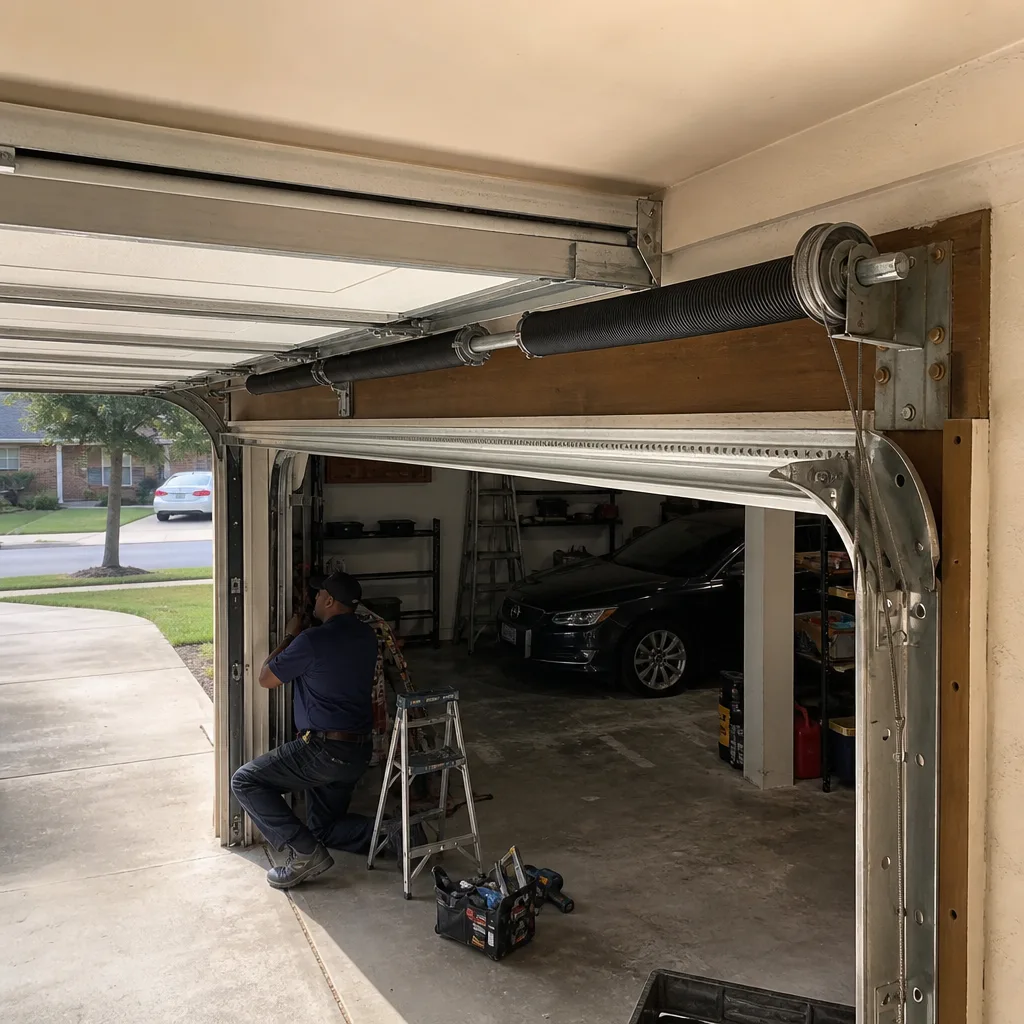
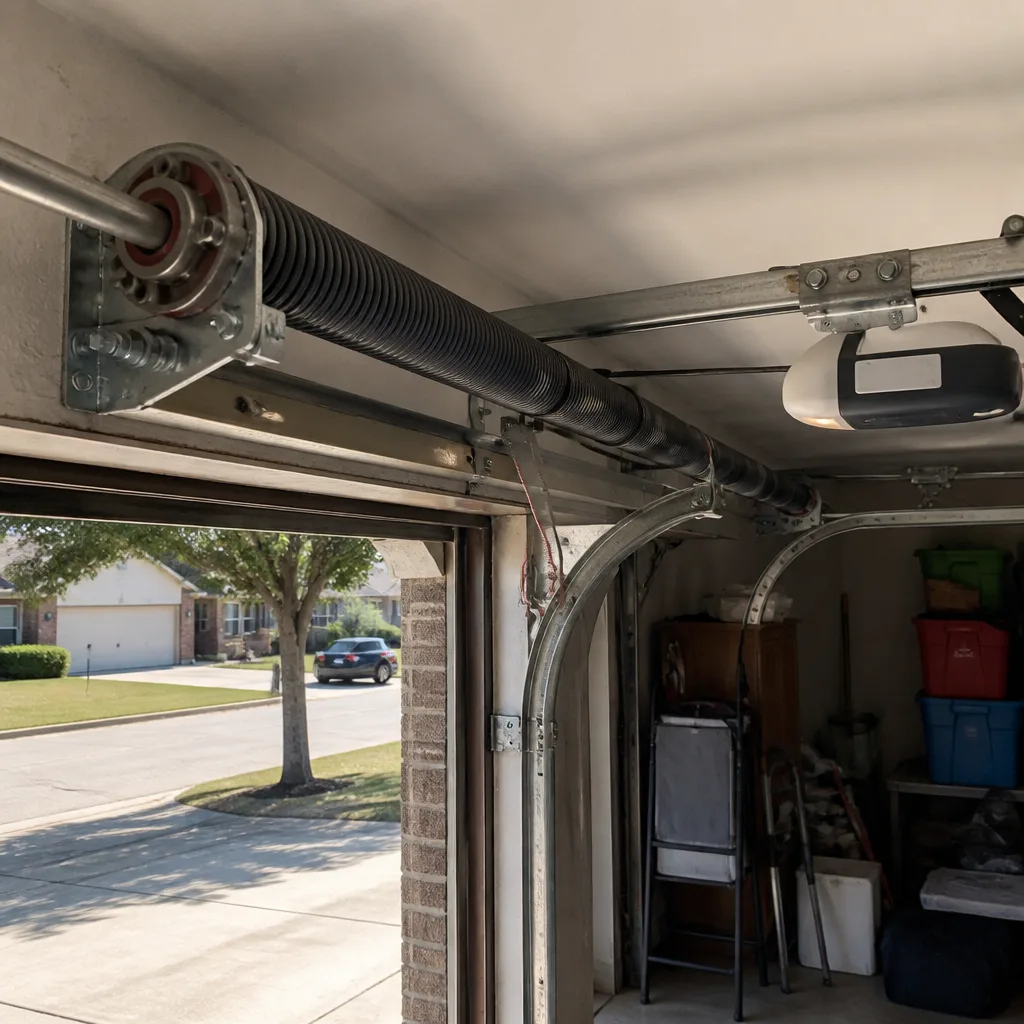
- Torsion Spring Wear: How to Spot It From the Ground
- Garage Door Opener Maintenance in Spring’s Climate
- Bottom Seals, Weatherstripping, and Why Spring’s Rain Matters More
- Testing Auto-Reverse and Photo Eyes: A Monthly Habit
- What a Professional Annual Tune-Up Actually Covers
The Failure Sequence: How a $30 Problem Becomes a $400 Repair
Every garage door system fails in a predictable order. Understanding this sequence is the difference between a $12 set of rollers and a $340 spring replacement.
It starts with the rollers. Nylon rollers degrade first, their bearings drying out or their wheels cracking from heat cycling. Steel rollers rust in Spring’s humidity, their bearings seizing. Either way, the door no longer rolls smoothly. The opener strains. The track takes lateral force it was never designed to handle.
That track misalignment shifts the door’s weight distribution onto the torsion spring unevenly. Springs are engineered to cycle a specific number of times under balanced load. Unbalanced load accelerates metal fatigue. In Spring, where afternoon temperatures spike and humidity swells, that fatigue happens faster than in drier climates.
The spring breaks. When a torsion spring snaps, it releases stored energy violently. We’ve replaced springs in homes along Louetta Road where the broken coil damaged the door panels, the opener carriage, and the ceiling drywall-exactly the kind of damage our Garage Door Warning Signs: A Spring Homeowner’s Reference Guide helps you avoid. The original problem was a $30 roller replacement ignored for two years.
Here’s where to interrupt the sequence cheaply:
- Stage 1 (Rollers): Replace degraded rollers at first sign of wobble or noise. Nylon rollers with sealed bearings last longer in humid climates than unsealed steel.
- Stage 2 (Track): Check track alignment with a level when rollers are replaced. Loose lag bolts into the header or wall brackets are common in Spring’s clay soils, which shift with seasonal moisture.
- Stage 3 (Spring balance): Test door balance by disconnecting the opener and lifting manually. If the door won’t stay at waist height, spring tension is off. Call a professional. This is not adjustable without winding bars and training.
We’ve completed this exact interrupt sequence on homes in Windrose and Champion Forest, catching problems before the spring failed. The homeowner spent $89 on a tune-up instead of $400 on emergency spring repair.
Monthly Visual Inspection: The Four-Minute Check
This inspection requires no tools, no ladder, and no mechanical knowledge. Do it the first Saturday of each month. Set a phone reminder.
Step 1: Close the door and stand inside the garage with the lights on. Look at the torsion spring above the door, or the extension springs along the horizontal tracks. You’re checking for:
- A visible gap in the spring coils (a broken spring)
- Rust flaking off the surface
- The spring appearing stretched or elongated compared to its neighbor
Do not touch the spring. Do not stand directly beneath it. A failing spring can drop without warning, and the stored torque is lethal. This is a visual check only, from at least six feet away.
Step 2: Run the door up and down once. Listen. A healthy door produces steady, low mechanical noise. Grinding, squealing, or rhythmic clicking indicates a specific problem:
- Grinding: Dry rollers or a failing opener gear
- Squealing: Metal-on-metal contact, usually dry hinges or a misaligned track
- Rhythmic clicking: A cracked roller hitting the track joint, or a loose chain/belt on the opener
Step 3: Watch the door’s travel. It should move at constant speed, neither accelerating nor slowing mid-cycle. Jerky motion means uneven spring tension or a binding roller.
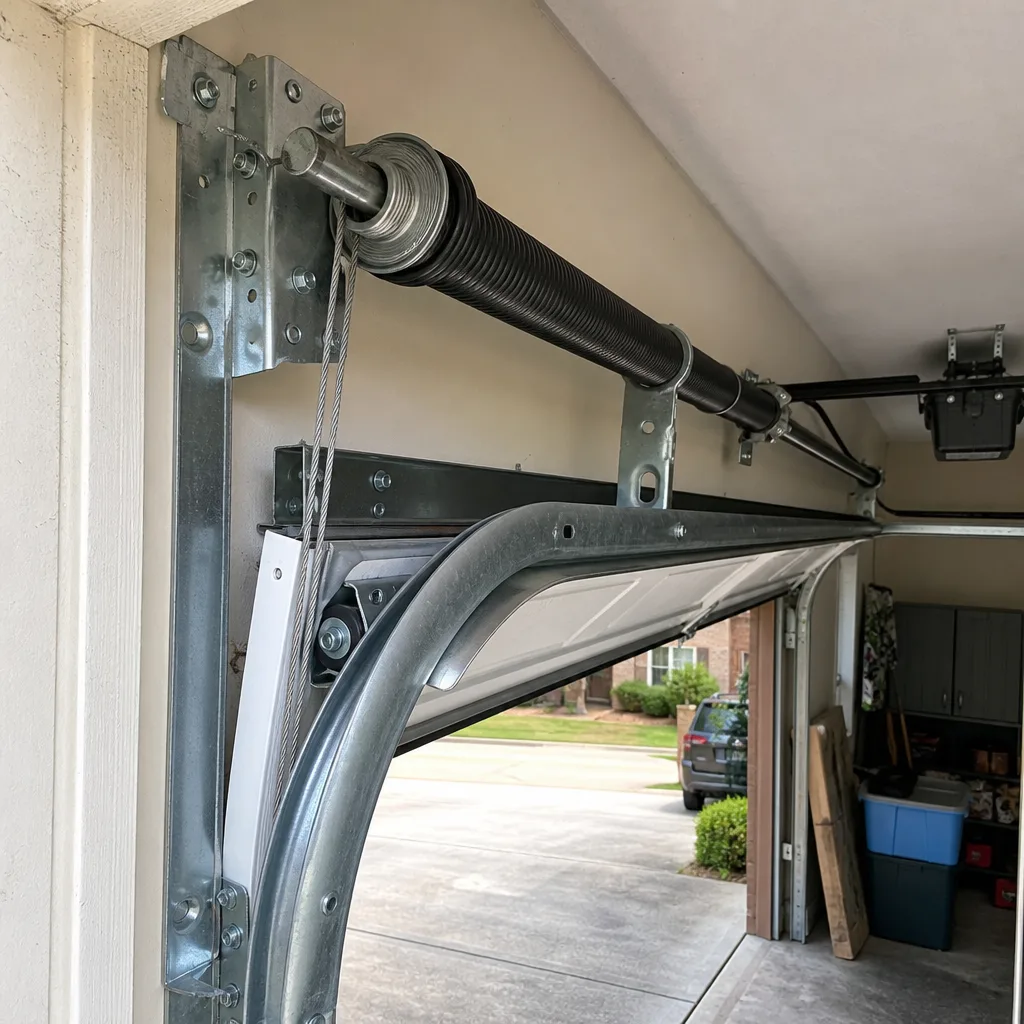
Step 4: Check the cables. These run vertically on each side of the door, from the bottom bracket to the drum (for torsion systems) or the pulley (for extension systems). Look for fraying, rust, or strands separating from the bundle. A frayed cable under load can snap with enough force to cut skin or damage property.
In Spring’s older neighborhoods like Memorial Northwest, we’ve found cables corroded from humidity exposure in garages that aren’t climate-controlled. The cable looks fine from a distance but fails under load. Get close. Use a flashlight.
This four-minute check costs nothing. It has prevented countless emergency calls we’ve answered at night and on weekends, when the homeowner finally noticed the problem that was visible for months.
What to Lubricate, What to Leave Alone, and What the Humidity Destroys
The most common mistake we see in Spring is the wrong lubricant. WD-40 is not a lubricant for garage doors. It is a water displacer and light solvent. It evaporates within days, leaving a sticky residue that attracts dust, pollen, and Gulf Coast moisture. We’ve opened track systems caked with black paste that started as a well-meaning spray of WD-40 three months prior.
Use silicone-based spray or white lithium grease. Both resist washout from humidity. Both maintain viscosity across Spring’s temperature swings, from 45-degree January mornings to 95-degree August afternoons.
Lubricate these points quarterly:
- Hinge pins: Where each hinge section pivots. One quick spray per hinge. Wipe excess.
- Roller bearings: The center of each roller wheel, if exposed. Sealed bearings need no lubrication; the seal is the lubricant.
- Opener rail: The top surface where the trolley travels. Not the chain or belt itself, but the rail it rides on. A thin film reduces drag and noise.
- Spring coils: A light coating on torsion springs reduces friction between active coils. This extends cycle life measurably.
Never lubricate:
- The track interior. Lubricant here collects grit and causes roller slippage. Clean tracks with a dry cloth only.
- The opener chain or belt. These are self-lubricating or require specific products per manufacturer. A generic spray degrades the factory coating on LiftMaster and Chamberlain units.
- Plastic components. Silicone can degrade certain plastics over time.
Apply lubricant in Spring’s drier months, March through May, when humidity is lowest and the product can set properly. Reapply in September before the fall humidity rises. A single can of proper garage door lubricant costs $8-12 and lasts two years.
Torsion Spring Wear: How to Spot It From the Ground
Torsion springs are the most dangerous component in your home’s garage door system. They store enough torque to lift 150-400 pounds of door weight, released through a tightly wound coil of hardened steel. When they break, the sound is like a gunshot. The recoil can damage property and cause serious injury.
We do not recommend any homeowner adjust or replace a torsion spring. The winding process requires solid steel winding bars inserted into the cogs of a loaded spring. Without training, the bars can slip, the spring can unwind uncontrollably, and the torque involved will break bones. We’ve seen the aftermath. It is not worth the $200-340 a professional charges for safe replacement. See How to Hire a Garage Door Contractor in Spring: A Step-by-Step Guide to find qualified help.
What you can do, safely from the ground, is spot the warning signs:
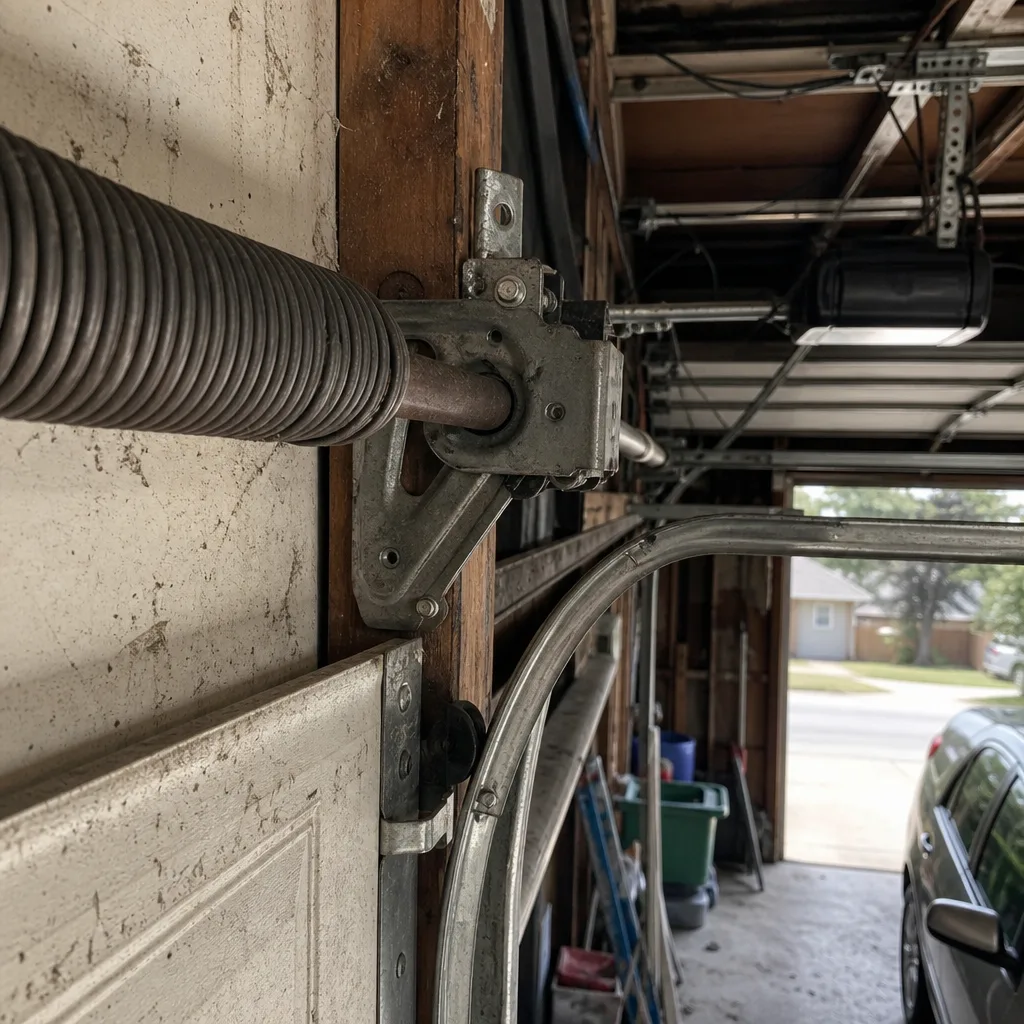
- Gap in the coil: A broken torsion spring separates into two distinct sections with a visible gap. The door will feel heavy, may open only a few inches, or the opener will strain and stop.
- Exposed rust: Surface rust that flakes when touched indicates the steel is degrading. In Spring’s humid garage environments, we’ve seen springs rust through in 5-7 years instead of the typical 10-15.
- Coil separation when relaxed: A healthy spring has coils that sit nearly touching when the door is down. If you can slide a pencil between relaxed coils, the spring has stretched and lost tension.
- Asymmetric lift: If one spring of a two-spring system breaks, the door lifts crooked, binding in the tracks. Stop using it immediately. Operating with one failed spring overloads the second, which will break soon after.
The test we recommend: disconnect the opener (pull the red emergency release cord) and lift the door manually to waist height. Release it slowly. A properly balanced door stays in place. A door that falls has weak springs. A door that rises has excessive tension. Either condition accelerates wear on the entire system.
If the door fails this test, call a professional. In Spring, garage door repair from a qualified technician includes spring replacement with the correct wire size, inside diameter, and length for your door’s weight. Wrong specs cause premature failure. We’ve corrected too many DIY or cut-rate replacements that used the wrong spring and failed within a year.
Garage Door Opener Maintenance in Spring’s Climate
Garage door openers in Spring face specific stressors: voltage fluctuations from summer storms, humidity infiltration into circuit boards, and heat buildup in unventilated garages. Most opener failures we diagnose in areas like Cypresswood and Klein could have been prevented with basic attention.
Monthly: Test the force settings. Place a 2×4 board flat on the ground where the door closes. Activate the door. It should reverse on contact. If it continues downward, the force is set too high, a safety hazard for children and pets. Adjust per manufacturer instructions, or call for service.
Quarterly: Inspect the safety sensor alignment. These are the two photo eyes mounted 4-6 inches above the floor on each side of the door track. They must face each other directly, with no obstructions. In Spring, we’ve found them knocked askew by lawn equipment, garden tools, or kids’ bikes. A blinking opener light usually indicates misalignment. Clean the lenses with a dry cloth; moisture spots from humid air can block the beam.
Annually: Check the opener’s mounting. The header bracket above the door and the ceiling bracket must be secure into solid framing. Spring’s clay soil causes subtle foundation movement that loosens lag bolts over time. A wobbling opener strains its internal gears. We’ve replaced dozens of stripped gear assemblies in Craftsman and Raynor units where the real problem was a loose mount.
Chain-driven openers need periodic tension adjustment. Belt-driven units are quieter but the belt degrades in heat. Screw-drive models, common in older Spring homes, require specific lubricant on the threaded rod. Check your manual, or bring the model number to us. We’re factory-familiar with all major brands.
If your opener is more than 15 years old, replacement parts may be discontinued. A new garage door opener in Spring from LiftMaster or Chamberlain includes modern safety features, battery backup for power outages, and smartphone connectivity that many of our customers find useful for deliveries and family access.
Bottom Seals, Weatherstripping, and Why Spring’s Rain Matters More
Spring, Texas receives 48-50 inches of annual rainfall, concentrated in spring and fall storm seasons. Water pooling at your garage door threshold doesn’t just damage stored items. It accelerates rust on door bottom brackets, corrodes the lower track section, and degrades the door’s structural base.
The bottom seal is your first defense. It’s a flexible rubber or vinyl strip attached to the door’s bottom edge, compressing against the concrete when closed. Inspect it monthly:
- Cracks or splits in the rubber
- Hardening or loss of flexibility (vinyl degrades faster in heat)
- Gaps visible when the door is closed, especially at the corners
- Evidence of rodent chewing (common in Spring’s wooded lots)
Replacement bottom seals are inexpensive, $15-30 for standard widths. The correct profile matters: T-style, bead-style, and bulb-style are not interchangeable. Bring a photo of your retainer channel to our shop, or we can match it on a service call.
Perimeter weatherstripping, the vinyl or rubber flap nailed or screwed to the door frame, is equally important. In Spring’s wind-driven rain, a gap of even 1/4 inch admits surprising water volume. We’ve replaced rotted door jambs in homes near Spring Creek where the weatherstripping failed years prior and the homeowner never noticed the gradual damage.
For garages with significant water intrusion, consider a threshold seal, a vinyl strip adhered directly to the concrete floor. It creates a dam that the door bottom seal compresses against. In flood-prone areas of Spring, this combination has saved homeowners thousands in water damage remediation.
Testing Auto-Reverse and Photo Eyes: A Monthly Habit
Federal law since 1993 requires all automatic garage door openers to reverse direction when encountering obstruction. The two systems that accomplish this, mechanical auto-reverse and photoelectric sensors, both fail gradually and both can be tested in two minutes.
Mechanical auto-reverse test: Place a solid object, 1.5 inches tall, flat on the floor centered under the door path. A standard 2×4 laid flat works. Close the door using the remote, not the wall button (which may have a constant-pressure override). The door should contact the board and immediately reverse. If it stops but does not reverse, or if it continues downward, the opener’s force sensitivity needs adjustment. This is a safety-critical setting; if you’re uncertain, call for service.
Photo eye test: These are the small boxes with amber or green LEDs, mounted 4-6 inches above floor level on each track. They’re invisible beams; interruption triggers reversal. Close the door normally, then pass a broom handle through the beam path. The door should reverse immediately. Test both sides individually.
In Spring, photo eyes fail most often from:
- Misalignment from physical contact (lawn equipment, bicycles, garbage cans)
- Lens contamination from dust, pollen, or humidity spotting
- Wire damage from rodents or moisture in conduit
- Electrical interference from nearby LED bulbs (a known issue with some Chamberlain models)
A steady glow on both eyes indicates alignment. Blinking or no light indicates a problem. Clean first, realign second, replace wiring third. If both eyes glow steadily but the door still won’t close, the logic board may be faulting. That’s a professional repair.
Test these systems monthly. The 120 seconds invested is trivial against the consequence of a door that closes on a child, pet, or vehicle.
What a Professional Annual Tune-Up Actually Covers
There is maintenance only a trained technician should perform, as explained in more guides & resources on our site. Our $89 Seasonal Tune-Up exists because we’ve seen what happens when these items are neglected for years.
A proper professional tune-up includes:
- Spring tension measurement and balance adjustment: Using a calibrated scale and winding bars, we verify the door’s actual weight against spring specification. We adjust to within 2 pounds of neutral balance. This is precise work; incorrect adjustment voids warranties and creates hazards.
- Roller and hinge condition assessment: We identify cracked nylon, seized bearings, and worn hinge barrels before they fail. Replacement during scheduled service costs less than emergency callout.
- Track alignment and fastener torque check: We verify plumb and level, then torque all lag bolts and bracket fasteners to specification. Spring’s foundation movement loosens these predictably.
- Cable inspection and drum set: We check for fraying, corrosion, and proper drum winding. Cables wound incorrectly on the drum cause uneven lift and door binding.
- Opener force and limit settings: We verify safety reverse function and travel limits using manufacturer procedures, not guesswork.
- Lubrication with climate-appropriate products: We use silicone-based lubricants selected for Gulf Coast humidity, applied to points homeowners cannot safely reach.
- Full safety system test: Photo eyes, auto-reverse, emergency release, and manual operation.
We document findings in writing. If a component needs replacement, we quote the price before any work proceeds. No surprises on the bill. That’s how we’ve operated since 1984.
Most tune-ups reveal at least one developing issue the homeowner hadn’t noticed. In Spring’s climate, that early catch typically saves $150-400 in prevented emergency repairs.
Common Mistakes to Avoid
- Using WD-40 as a lubricant. It attracts dust and moisture in Spring’s humidity, creating abrasive paste that destroys rollers and hinges. Use silicone spray or white lithium grease instead.
- Ignoring a noisy door. Grinding or squealing is not normal aging. It is a specific mechanical failure in progress, usually a dry roller or misaligned track that will cascade into costlier damage.
- Adjusting torsion springs with improvised tools. We’ve seen winding bars made from screwdriver shafts, crowbars, and pipe wrenches. These slip. The resulting injuries are severe and permanent. This adjustment requires solid steel winding bars of exact diameter and professional training.
- Blocking photo eyes with storage. In Spring’s smaller ranch-style garages, homeowners stack boxes or park bicycles against the tracks, knocking sensors misaligned. The blinking opener light is a warning, not a nuisance to override by holding the wall button.
- Delaying bottom seal replacement. A $20 seal ignored for two years allows water intrusion that rusts bottom brackets, degrades the door’s lower section, and damages stored items. The total cost becomes $200-600.
- Running an opener with a broken spring. The opener is not designed to lift full door weight. Doing so strips the internal gear, burns the motor, and often damages the door panels. Disconnect and call for service.
- Skipping annual professional inspection. Self-maintenance catches visible problems. Precision adjustments, spring tension verification, and component wear measurement require tools and training most homeowners do not have.
When to Call a Professional
Call a qualified technician when you observe broken springs, frayed cables, doors that won’t stay balanced when manually tested, openers that fail safety reverse, or any grinding noise you cannot source. These are not maintenance items. They are active failures that worsen with use.
Carl Dutton and the team at Mainspring Garage Door Co. offer free estimates in Spring. We’ll inspect your system, explain what we find in plain language, and quote a flat price before any work begins. Most repairs are completed in a single visit because our trucks carry springs, cables, rollers, and openers for all major brands. Call (936) 280-5668.
Frequently Asked Questions
Perform basic visual inspection and safety testing monthly, lubricate moving parts quarterly, and schedule professional tune-ups annually or every 18 months at most. Spring’s humid Gulf Coast climate accelerates wear compared to drier regions, so quarterly lubrication is more important here than in, say, Arizona or Colorado.
Homeowners can safely lubricate hinges, roller bearings, and the opener rail with proper silicone or lithium-based products. Avoid the track interior, chain or belt drives, and any component you’re uncertain about. Professional lubrication during an annual tune-up reaches points that require ladder access and covers components like torsion springs that demand safety awareness.
Noise indicates specific mechanical problems, not normal aging. Grinding usually means dry or failing rollers. Squealing indicates metal-on-metal contact from dry hinges or track misalignment. Rhythmic clicking suggests a cracked roller or loose chain. Identify the noise type, inspect the corresponding component, and address it before the stress transfers to more expensive parts.
Mainspring Garage Door Co. offers a $89 Seasonal Tune-Up that includes full inspection, spring balance verification, safety system testing, and climate-appropriate lubrication. This typically prevents $150-400 in emergency repairs by catching wear before failure. Call (936) 280-5668 to schedule.
No. Torsion springs store lethal torque. Winding and unwinding requires solid steel bars of exact diameter, inserted into loaded cogs with precise technique. Improvised tools slip. The recoil breaks bones and causes permanent injury. Spring replacement costs $200-340 from a professional. That price includes safety, correct specification, and warranty. It is not worth the risk to attempt yourself.
Standard torsion springs are rated for 10,000 cycles (roughly 7-10 years of typical use). In Spring’s humidity, with frequent heat cycling in unventilated garages, we’ve seen premature failure at 5-7 years when maintenance is neglected. High-cycle springs (25,000-50,000 cycles) last longer and are worth considering for heavily used doors.
First, check that the opener is plugged in and the circuit breaker hasn’t tripped. Pull the emergency release cord (red handle) and try lifting the door manually. If it moves easily, the problem is likely the opener. If it’s heavy or stuck, you likely have a broken spring or cable. Do not force it. Disconnect the opener to prevent damage and call for service. Mainspring answers live, 24/7, including nights and weekends.
The Bottom Line
Garage door maintenance in Spring is not complicated, but it is specific. The wrong lubricant, the skipped monthly look, the ignored noise, these small omissions compound through the failure sequence until a preventable problem becomes an emergency. A four-minute monthly inspection, quarterly lubrication with the right product, and an annual professional tune-up will extend your door’s life by years and save hundreds in avoided repairs. The work is straightforward. The discipline of doing it is what separates homeowners who never think about their garage door from those making stressed calls at inconvenient hours.
Mainspring Garage Door Co. has served Spring and surrounding communities since 1984. We answer our phones with a live person, 24/7. Our technicians arrive in uniform, with background checks and the right parts on the truck. We state the flat price before any work begins, and we stand behind every job with our 90-Day Done Right Promise in writing. For a free estimate, or to schedule your $89 Seasonal Tune-Up, call (936) 280-5668.
Written by Carl Dutton, Owner at Mainspring Garage Door Co., serving Spring since 2016.