
Last updated September 10, 2026
Full 25-point door and opener safety check with every visit - springs, cables, rollers, tracks, and your LiftMaster or Chamberlain opener included
You get a price before we start. It does not change when the truck arrives.
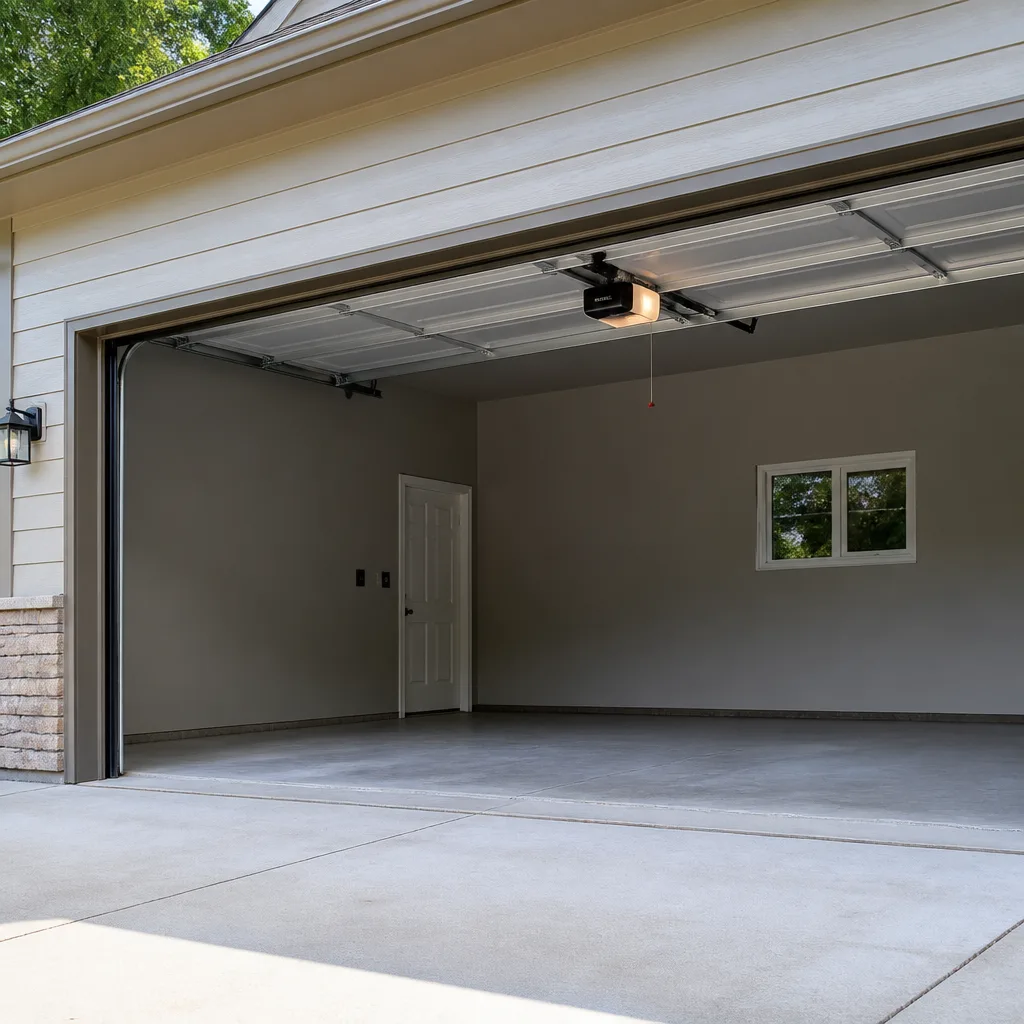
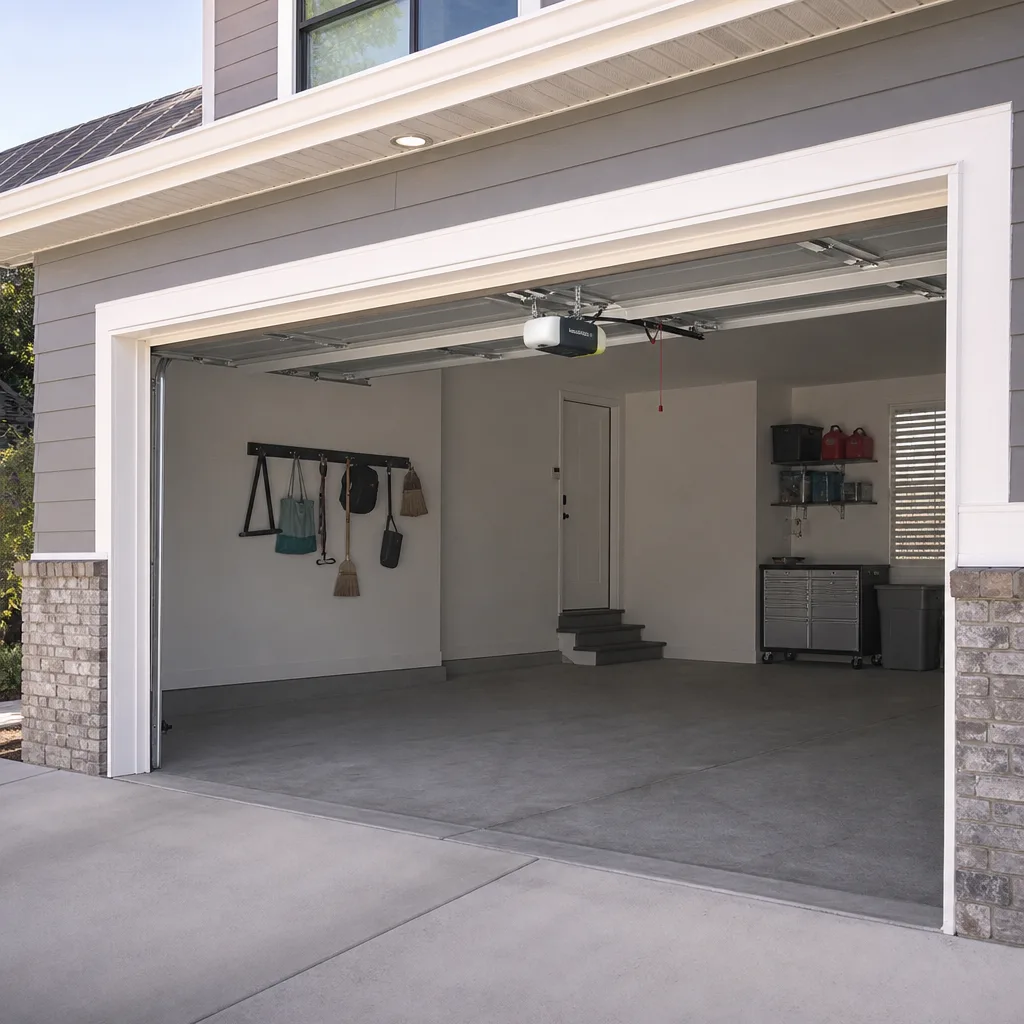
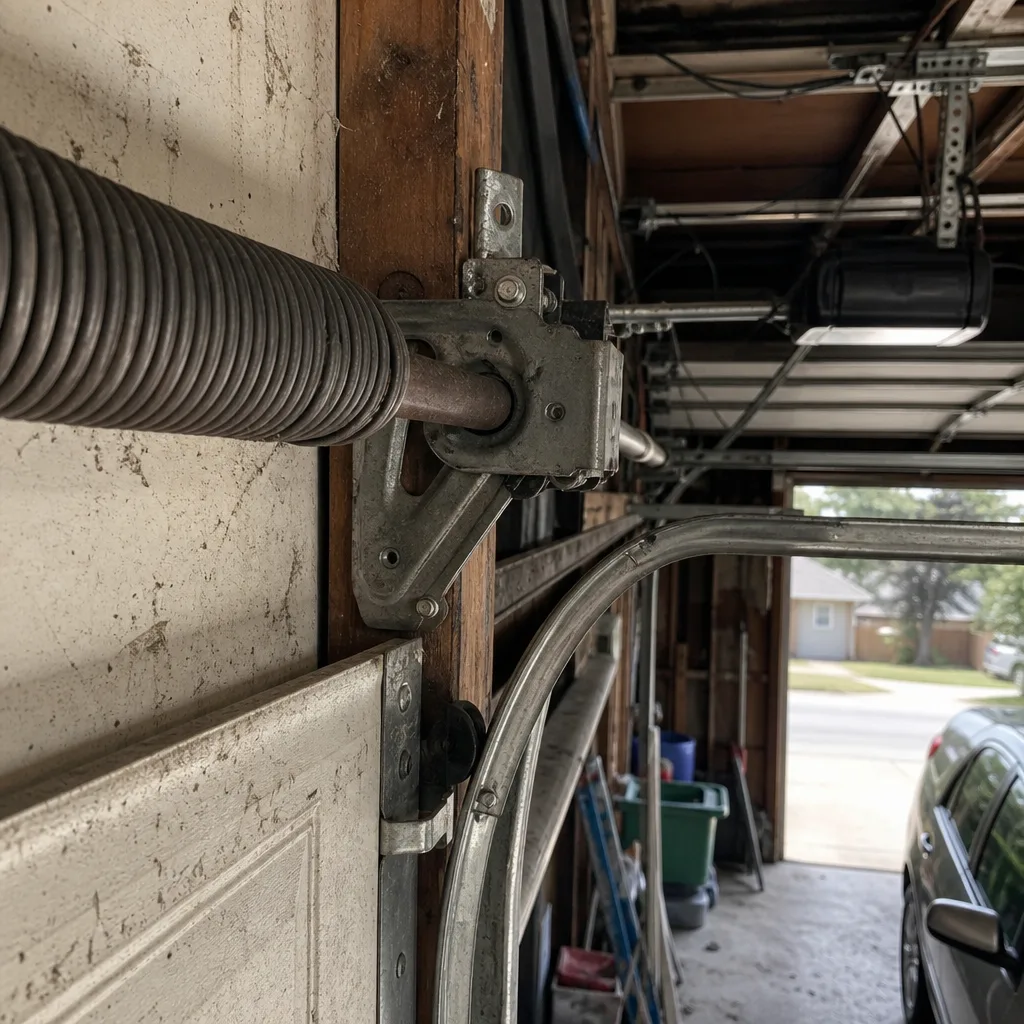 Before
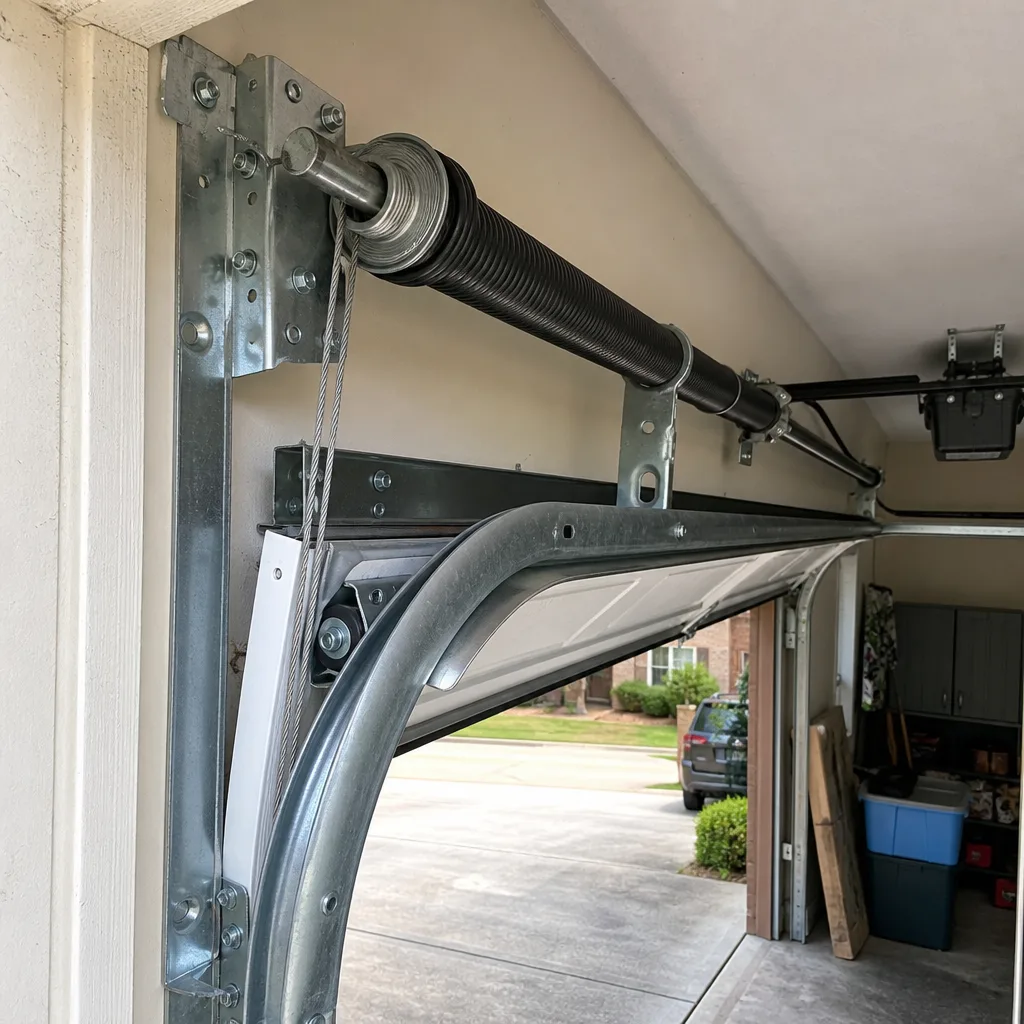 After
After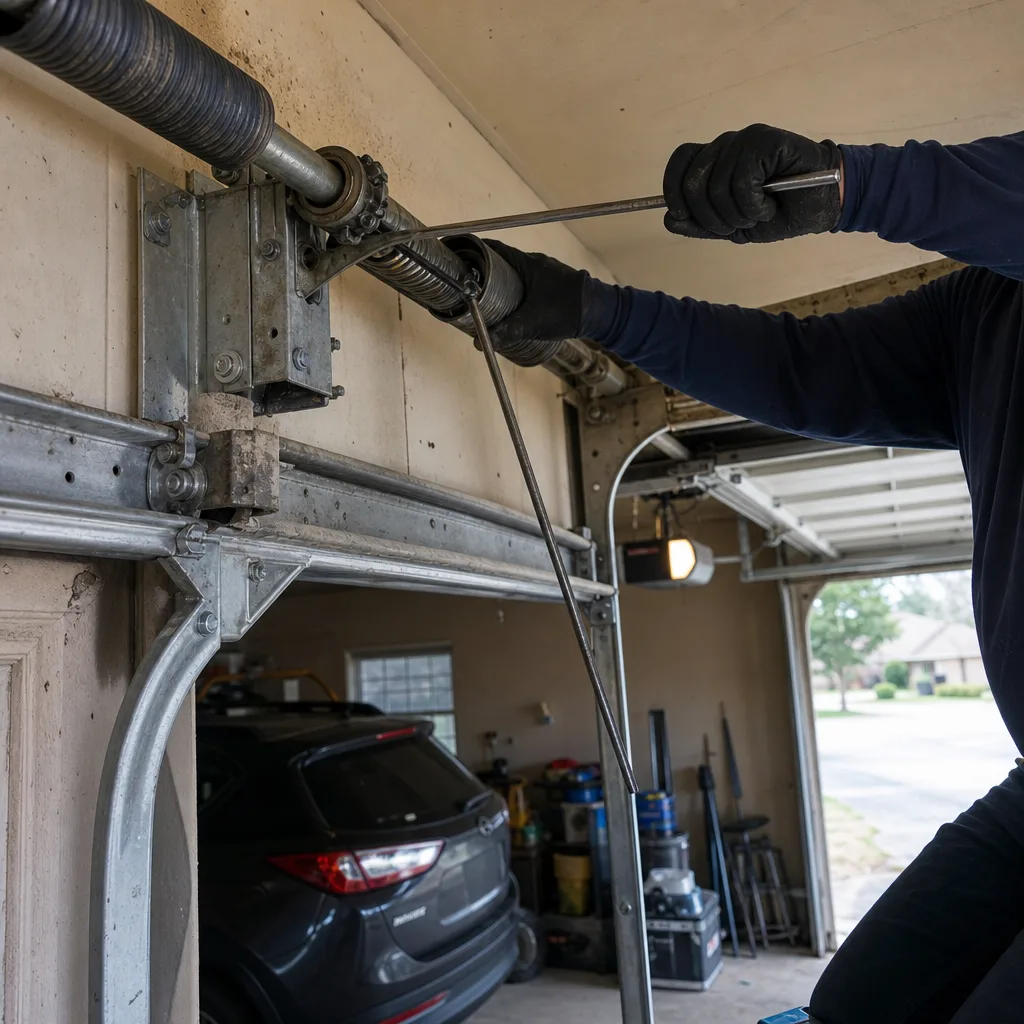 Before
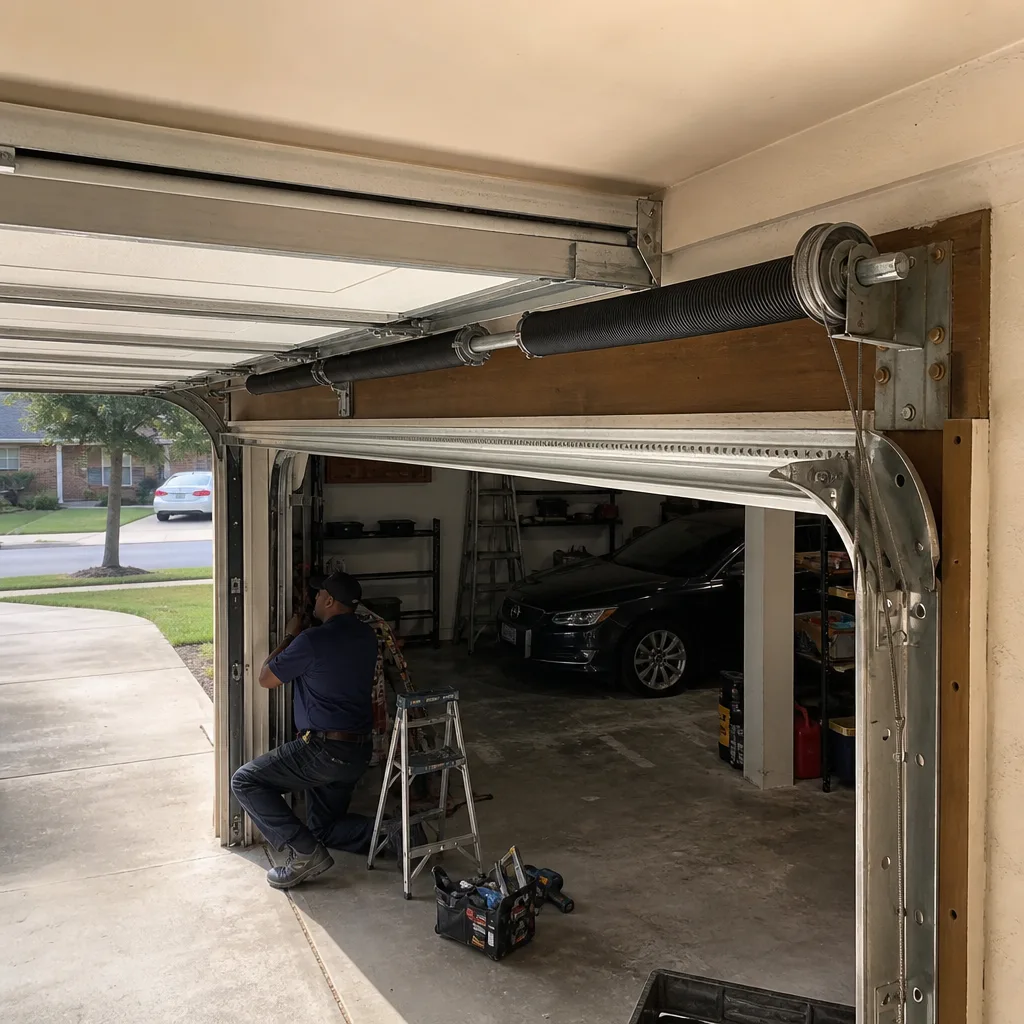 After
After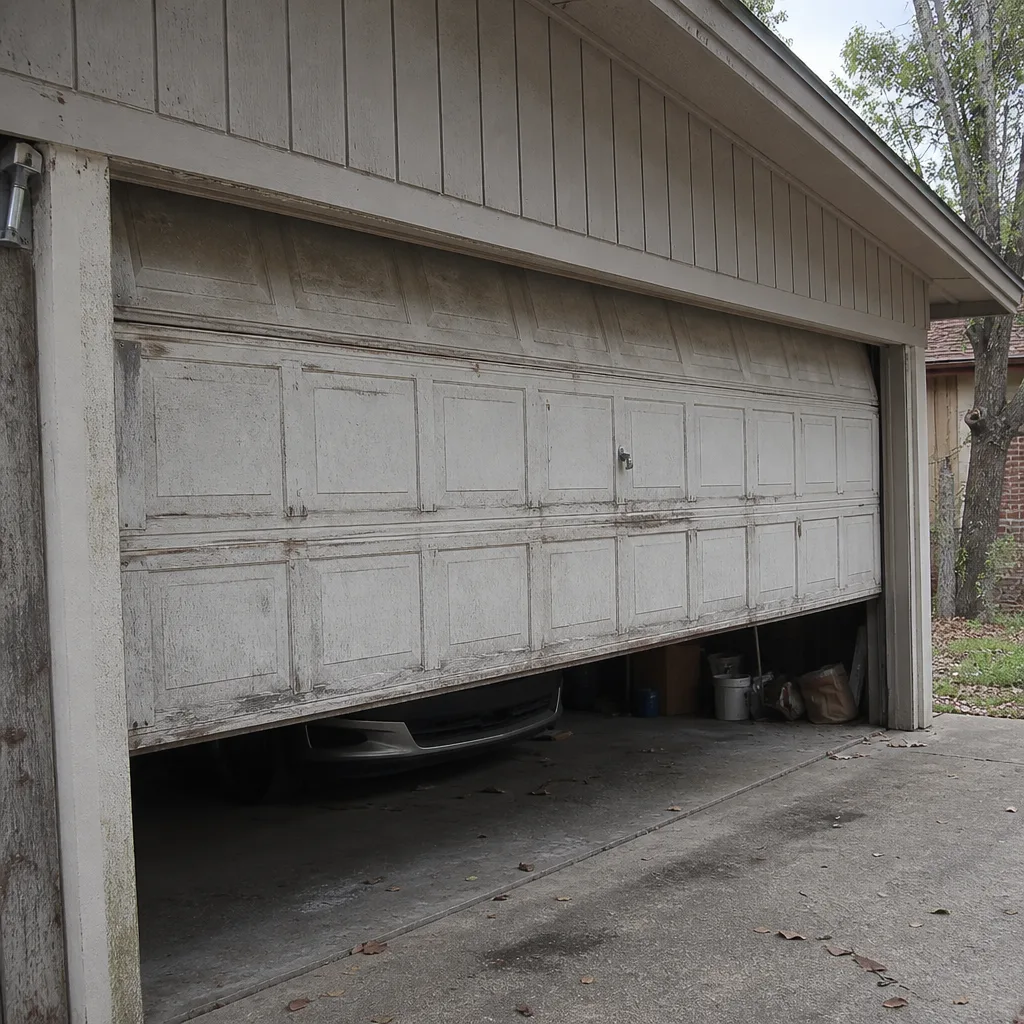 Before
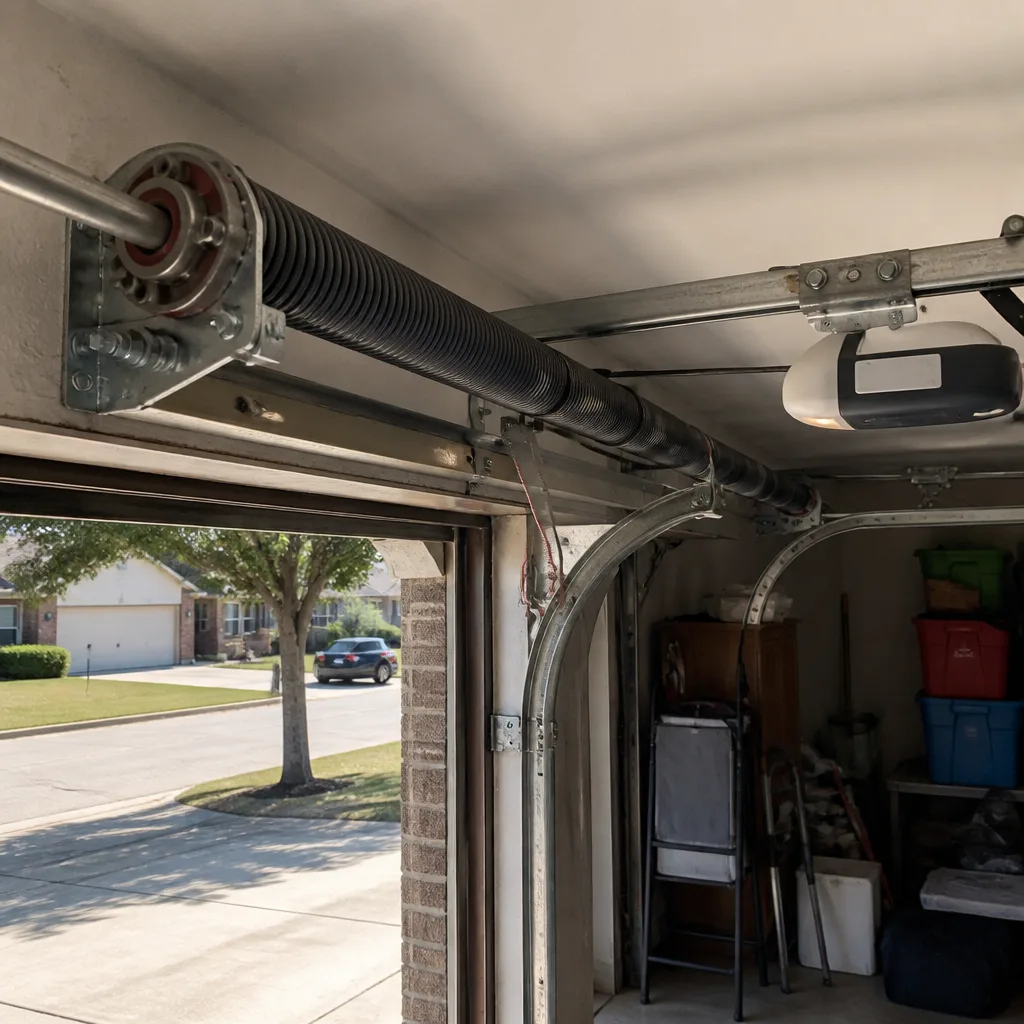 After
AfterGarage Door Warning Signs: A Spring Homeowner’s Reference Guide
Here is something most homeowners in Spring never learn until it costs them: that grinding noise you hear when the door travels up or down is almost never the opener. In our experience, it is almost always a roller wearing against a fatigued bracket, and the repair typically runs under $80 if you catch it before the roller seizes or the bracket cracks. Wait too long, and the same fix becomes a $400 track-and-roller replacement because the door torques the frame out of square.
Garage doors do not fail silently. They announce trouble with specific sounds, movements, and visual changes. The problem is that most homeowners misread these signals, blame the wrong component, or assume the symptom will resolve itself. This guide translates what your door is actually telling you into the mechanical failure behind it, so you can decide what needs attention now, what can wait, and what requires a trained technician.
We have been repairing and replacing garage doors in Spring since 2016, and before that our shop served the broader Houston area back to 1984. The patterns in this guide come from thousands of service calls across neighborhoods from Gleannloch Farms to Windrose, from older homes near Old Town Spring to newer builds in Harmony. The climate here, the soil, the construction eras, they all leave signatures on how doors fail.
Quick Answer
The most common garage door warning signs are: grinding or squealing during travel (worn rollers or dry bearings), slow or hesitant movement (failing springs or opener strain), popping or banging sounds (torsion spring fatigue or loose hardware), uneven closing or floor gaps (track misalignment or frame settling), and reversal before reaching the floor (safety sensor misalignment or limit switch drift). Catching these early in Spring’s humid subtropical climate, where rust accelerates and foundation movement is common, typically reduces repair costs by 40-60% compared to waiting for complete failure.
Table of Contents
- What Different Sounds Mean: A Component-by-Component Diagnostic
- Reading Torsion Springs: Visual Signs Before the Break
- Slow or Hesitant Door Movement: Three Causes in Order of Likelihood
- Why Your Door Reverses Before Hitting the Ground
- The Floor-Gap Test: What Uneven Sealing Reveals
- Opener Strain Signs That Point to Door Problems, Not Motor Failure
- How Spring’s Climate and Soil Accelerate Specific Failures
- A Seasonal Inspection Routine You Can Perform Safely
What Different Sounds Mean: A Component-by-Component Diagnostic
Sound is the earliest and most reliable warning system your garage door provides. The key is matching the specific sound to the specific component, because the repair cost and urgency differ dramatically.
Grinding: The Roller-and-Bracket Warning
Grinding during door travel, that low metallic growl, indicates metal-on-metal contact where lubricated rolling should occur. In Spring, we see this most often on steel rollers that have lost their bearings after five to seven years of service, or on nylon rollers whose internal bearings have seized and are now spinning the roller shaft directly against the bracket hole.
The sound originates at the roller-to-track interface, not the opener. Homeowners frequently replace a perfectly good opener motor when the real problem is $12 worth of rollers and twenty minutes of labor. If you hear grinding, watch the rollers as the door moves. A healthy roller spins freely; a failed one skids or chatters.
Cost context: Roller replacement in Spring typically runs $75-$150 for a standard 16×7 door with ten rollers. If grinding progresses to a seized roller, the door can jump the track, bending the vertical track section and requiring $300-$500 in track, roller, and labor.
Squealing: Dry Bearings and Hinge Wear
High-pitched squealing, especially during the first and last foot of travel, points to dry hinge pins or opener rail bearings. This is maintenance, not failure, but neglected it becomes failure. In our Spring service area, homes near the Grand Parkway corridor with newer construction often develop squealing within three years because the original installer used minimal lubrication.
The fix is straightforward: white lithium grease on hinge pins, silicone spray on the opener rail and trolley. Never use WD-40 as a long-term lubricant; it displaces moisture briefly then evaporates, leaving metal drier than before.
Popping or Banging: Torsion Spring Fatigue
A single loud pop, or a rhythmic popping during door travel, is the sound of a torsion spring winding or unwinding unevenly. The spring coils are binding against each other where rust or metal fatigue has created rough surfaces. Each pop represents stress concentration that brings the spring closer to fracture.
This sound demands prompt attention. A torsion spring stores roughly 100 foot-pounds of torque on a standard residential door. When it breaks, it releases that energy in an instant. We have seen springs snap at 6 AM on a Tuesday and blow a hole through the drywall of an adjacent laundry room in a Windrose home. The spring itself is a dangerous component to inspect or handle without training.
Safety note: Torsion springs are under extreme tension and can cause serious injury or death if mishandled. Do not attempt to adjust, repair, or replace a torsion spring yourself. This work requires specialized tools and training. If you hear popping from the spring tube above your door, call a professional.
Banging or Rattling: Loose Hardware and Track Mounts
Intermittent banging, especially at the top of the travel arc, usually means a loose track mounting bracket or a lag bolt backing out of the header. Spring’s clay-heavy soils create foundation movement that loosens hardware over seasons. In Gleannloch Farms, where many homes sit on expansive clay, we find loose header bolts on ten-year-old doors with surprising regularity.
A loose track mount allows the horizontal track to shift during operation. The door rollers bang against the track edge, and each impact loosens the mount further. Caught early, this is a $100-$200 tightening and realignment. Ignored, it can twist the track system beyond repair.
Summary Sound Table
| Sound | Component | Urgency | Typical Spring TX Cost |
|---|---|---|---|
| Grinding | Rollers/brackets | Within 2 weeks | $75-$150 |
| Squealing | Hinges/opener rail | Maintenance window | $0 (DIY lube) or $89 tune-up |
| Popping/banging | Torsion spring | Immediate | $180-$340 spring replacement |
| Rattling/banging | Track mounts/hardware | Within 1-2 weeks | $100-$250 |
Reading Torsion Springs: Visual Signs Before the Break
Torsion springs are the muscle of your garage door system. They carry the full weight of the door, typically 150-250 pounds for a standard double-car door, and they do it through roughly ten thousand cycles of winding and unwinding. A cycle is one open and one close. If you use your door four times daily, you hit ten thousand cycles in about seven years.
The spring is named for what it does: it torques, or twists, to store energy. Our company, Mainspring Garage Door Co., takes its name from this exact component because it is the heart of the system. When the spring fails, nothing else works correctly, and the door becomes a dead weight that can damage the opener, cables, and panels.
Here is what to look for before the break happens.
Gap Formation in the Coil Body
A healthy torsion spring sits with its coils touching or nearly touching along its entire length. When fatigue sets in, the metal loses its elasticity and the spring begins to “set,” meaning it does not fully unwind between cycles. This creates visible gaps between coils that were previously tight.
Inspect your spring from inside the garage with the door closed. Look along the length of the spring tube. Gaps wider than a quarter-inch between adjacent coils indicate the spring has lost significant tension. The door may still operate, but the opener is now doing work the spring should handle, and the remaining spring life is measured in weeks or months, not years.
Rust Streaking and Surface Pitting
Spring’s humidity averages 75% annually, with summer peaks above 90%. This moisture condenses on the cold steel of the spring tube overnight, and even galvanized springs eventually develop surface rust. The critical sign is not light surface discoloration but active rust streaking that runs down from the spring coils onto the tube or wall.
Rust creates stress risers, microscopic cracks that propagate under cyclic loading. A spring with visible pitting has lost cross-sectional strength. We replace springs with active rust streaking regardless of whether they have broken yet, because the failure mode is unpredictable and the consequence of a break is severe.
Uneven Tension Indicators
Doors with two torsion springs, the standard for heavier or wider doors, should wind and unwind symmetrically. If one spring fatigues faster than the other, you will see it in the door’s behavior: it rises unevenly, with one side leading, or it sits crooked when fully open.
Check the cable drums at each end of the spring tube. The cables should wind onto the drums in neat, even layers. If one drum shows cable overlap or sloppy winding while the other is orderly, the corresponding spring has weakened. This imbalance strains the door panels and the opener, and it accelerates wear on the lifting cables.
The “Set” Measurement
A simple visual check: with the door fully closed, measure the gap between the bottom of the door and the floor at each corner. A spring losing tension allows the door to sit heavier on one side, creating an uneven gap. This is not a frame issue; it is a spring balance issue, and it precedes complete failure.
Spring replacement in Spring typically costs $180-$340 for a standard residential door, depending on spring size and whether one or both springs require replacement. We always recommend replacing springs in pairs even if only one has failed, because matched springs ensure even wear and predictable future replacement timing.
Slow or Hesitant Door Movement: Three Causes in Order of Likelihood
When a door that once moved briskly now labors or pauses during travel, homeowners often assume the opener motor is failing. In our experience across Spring, the opener is the actual problem less than 20% of the time. Here are the three causes in order of how commonly we encounter them.
1. Torsion Spring Fatigue (60% of cases)
A weakening spring does not provide the assisted lift the door expects. The opener strains, moves slowly, and may overheat and shut down on thermal protection. The door feels heavy when operated manually, the test described below.
Manual operation test: Pull the red emergency release cord to disengage the opener. Lift the door manually to waist height and release. A properly balanced door stays put or drifts slowly. A door with fatigued springs falls rapidly or is difficult to lift from the closed position.
This test is safe to perform, but if the door feels unexpectedly heavy or drops hard, do not continue testing. The spring needs professional attention.
2. Track Misalignment or Obstruction (25% of cases)
The door rollers bind in tracks that have shifted, bent, or accumulated debris. In Spring, we see this frequently after storms or when vehicles bump the vertical track guards. The opener detects the increased load and slows or reverses, interpreting resistance as an obstruction.
Visual inspection: look at the vertical tracks from inside the garage with the door closed. They should be perfectly plumb and parallel to each other, with consistent spacing from the door edge at top and bottom. A track that bows inward or has been knocked out of parallel creates rolling resistance that the opener cannot overcome smoothly.
3. Opener Drive Wear or Force Setting Drift (15% of cases)
Chain-drive openers stretch over time. Belt drives fray. Screw drives accumulate debris in the threads. In each case, the opener loses mechanical efficiency and must work harder for the same result. Additionally, the force limit settings on the opener logic board can drift with temperature cycling, causing the opener to interpret normal door weight as excessive load.
Opener service in Spring, including force calibration, gear replacement, or drive tuning, typically runs $150-$280. If the opener is more than fifteen years old and requires internal repair, we often recommend garage door opener replacement in Spring because modern units offer safety and efficiency improvements that justify the investment.
The key distinction: if the door moves smoothly and lightly by manual test, the problem is likely the opener. If the door is heavy or binding manually, the problem is the door system, and replacing the opener without addressing the root cause will burn out the new unit prematurely.
Why Your Door Reverses Before Hitting the Ground
This is the warning sign most commonly misdiagnosed by homeowners, and the misdiagnosis costs money. A door that reverses before reaching the floor is almost never a spring problem. It is a safety system or limit setting issue, and the repair cost is typically one-third to one-half of what spring work would run.
Safety Sensor Misalignment
Since 1993, federal law has required photoelectric safety sensors on all garage door openers. These small boxes sit a few inches above the floor on each side of the door opening, sending an invisible beam across the threshold. If the beam is interrupted or the sensors cannot see each other, the opener reverses the door rather than close it on an obstruction.
Sensor misalignment is the leading cause of unexplained reversal. The sensors get bumped by garbage cans, bikes, or the car bumper. Spring’s clay soils shift door frames subtly with moisture changes, and this frame movement can throw off sensor alignment even without direct contact. A sensor LED that blinks rather than glows steady indicates misalignment.
Realignment is simple for a trained technician and typically runs $75-$125. Some homeowners attempt DIY alignment, but the sensors must be parallel in three axes, and improper alignment can create a dangerous blind spot where the door closes on a child or pet without triggering reversal.
Limit Switch Drift
The opener’s limit switches tell the motor when the door is fully open and fully closed. These settings drift over time due to vibration, temperature cycling, and drive wear. When the “close” limit drifts shallower than the actual floor position, the opener thinks it has reached the floor and reverses prematurely.
Limit adjustment requires accessing the opener logic board, usually on a ladder, and adjusting small screws or digital settings. We include limit calibration in our garage door repair in Spring service calls because it is often intertwined with force setting verification.
Why This Distinction Matters for Cost
A homeowner who assumes reversal means spring failure may delay calling, expecting a major expense. The actual repair is often under $150. Conversely, a technician who does not verify sensor and limit function before recommending spring work is either incompetent or dishonest. Our garage door repair in Spring estimates always include sensor testing and limit verification at no additional charge, because the right diagnosis is the foundation of a square deal.
The “Obstruction” False Positive
Spring winds deposit pollen, leaves, and debris on the floor near the door opening. A leaf caught in the sensor beam, or a spider web across the lens, triggers the same reversal as a misalignment. Before calling for service, wipe the sensor lenses with a clean cloth and clear the beam path. If the problem persists, the issue is alignment or wiring, not debris.
The Floor-Gap Test: What Uneven Sealing Reveals
The gap between your closed garage door and the floor is a diagnostic tool most homeowners never use. An uneven gap, where light shows under one corner but not the other, reveals frame and track issues that affect door operation, energy efficiency, and security.
How to Perform the Test
- Close the door fully and turn off the garage lights.
- Stand outside and look for light penetration under the door bottom seal.
- Note whether the gap is consistent across the full width or varies by location.
- From inside, run a hand along the bottom seal to feel for drafts or irregular compression.
What Different Gap Patterns Indicate
Gap at one corner only: The vertical track on that side has shifted outward or the jamb has settled. Spring’s expansive clay soils cause differential foundation settlement, especially in homes built before 2000. The track no longer holds the door square against the seal. This is a track realignment issue, typically $150-$250.
Gap in the center, tight at corners: The door bottom panel has sagged or the seal itself has compressed permanently. Panel sag occurs when the horizontal reinforcement strut weakens or when a door with inadequate strutting spans a wide opening. Replacement seal installation runs $100-$180; panel reinforcement or replacement is higher.
Intermittent gap that changes with weather: The door frame moves with soil moisture, expanding in wet seasons and contracting in dry periods. This is common in Spring’s gumbo clay areas, particularly in the older neighborhoods east of I-45. A flexible bottom seal helps accommodate this movement, but significant frame shift requires structural assessment.
Visible seal damage with consistent gap: The rubber or vinyl bottom seal has cracked, torn, or pulled from its retainer. Replacement is straightforward and prevents water intrusion, pest access, and air leakage that drives up cooling costs in Texas summers.
The floor-gap test takes two minutes and requires no tools. We recommend performing it seasonally, particularly after the heavy rains of Spring’s March-May wet season when soil movement is most pronounced.
Opener Strain Signs That Point to Door Problems, Not Motor Failure
Opener motors rarely fail gradually. When a motor dies, it usually dies completely, with no warning, no gradual slowing. A motor that still runs but struggles, overheats, or triggers its thermal protection is almost always responding to a door system problem, not failing itself.
Signs of Opener Strain from Door Issues
- Thermal shutdown: The opener stops mid-travel, waits ten to fifteen minutes, then works again. This is the motor protecting itself from overload caused by excessive door weight or binding.
- Chain or belt sag between cycles: The drive mechanism hangs loose when the door is stationary, indicating the opener is working against resistance that prevents smooth return to the resting position.
- Loud motor laboring with slow door movement: The motor runs at full speed but the door creeps. The motor is fine; it is delivering power that is being absorbed by friction or excessive load elsewhere.
- Intermittent operation that improves after manual assistance: If giving the door a slight push helps the opener complete a cycle, the spring is not providing adequate assist.
Before considering opener replacement, always verify door balance and track condition. We have replaced perfectly good openers on service calls where the real problem was a $200 spring adjustment. Our garage door opener service in Spring includes full door system diagnostics because the components are interdependent.
When opener replacement is appropriate, we are factory-familiar with all major brands: LiftMaster, Chamberlain, Genie, and the door manufacturers’ own systems including Clopay and Wayne Dalton. We stock common models on our trucks for same-day installation when the door system itself is sound.
How Spring’s Climate and Soil Accelerate Specific Failures
Garage door systems are national products installed in local conditions. The specific conditions in Spring, Texas create failure patterns that a generic guide will not predict.
Humidity and Rust Acceleration
Spring’s average annual relative humidity of 75%, with summer peaks above 90%, creates condensation on metal components that drier climates avoid. Torsion springs, cable drums, and bottom brackets rust from the inside out in unconditioned garages. We see spring failures at six to eight years in Spring where the same spring might last twelve years in Albuquerque or Denver.
The mitigation is not complex: annual lubrication with a moisture-displacing product, adequate garage ventilation, and prompt replacement of components showing active rust. Our $89 Seasonal Tune-Up includes full lubrication and rust inspection.
Expansive Clay Soils and Foundation Movement
The gumbo clay that underlies much of Spring expands when wet and shrinks when dry, creating vertical foundation movement of an inch or more seasonally. This movement transfers to the garage door frame, loosening track mounts, shifting sensor alignment, and creating the floor gaps described earlier.
Homes in Windrose, Gleannloch Farms, and the older neighborhoods near Main Street in Spring show this pattern most clearly. Newer construction with post-tension slabs experiences less movement, but no Spring home is immune. We account for this in our installations by using adjustable track mounts and flexible seals where appropriate.
Storm Debris and Wind Loading
Spring sits in a severe weather corridor. Hail, wind-driven debris, and the pressure differentials of passing storms stress door panels and weather seals. After significant weather events, we see clusters of calls for panel denting, seal displacement, and opener force setting drift caused by the door binding against a tweaked frame.
A door that operated normally before a storm and poorly after is not coincidence. The storm changed something, and the change is usually visible with trained inspection.
UV Exposure on South and West Faces
Spring’s sun exposure, particularly on south and west-facing garage doors, degrades vinyl seals and fades steel door finishes. UV damage is not merely cosmetic; it indicates the protective coating has broken down, and rust will follow. We recommend inspecting south and west doors annually, twice as often as north-facing installations.
A Seasonal Inspection Routine You Can Perform Safely
Not every warning sign requires a service call. Homeowners can safely perform a seasonal inspection that catches problems early and provides useful information when professional service is needed.
Monthly: Visual and Auditory Check
- Operate the door and listen for new or changed sounds. Compare to the sound table earlier in this guide.
- Watch the door travel for smooth, consistent speed and straight alignment.
- Check the bottom seal for visible damage or compression.
- Verify the safety sensors’ indicator LEDs are steady, not blinking.
Quarterly: Balance and Hardware Check
- Perform the manual operation test described in the movement section.
- Visually inspect the torsion spring for gaps, rust streaking, or coil separation. Do not touch the spring.
- Check that all track mounting bolts and lag screws are tight. Do not attempt to adjust track position.
- Test the safety reversal: place a 2×4 flat on the floor in the door path and close the door. It should reverse on contact.
Annually: Professional Tune-Up
Our $89 Seasonal Tune-Up includes spring tension verification, full lubrication, hardware torque check, opener force and limit calibration, safety system testing, and a written condition report. For most Spring homeowners, this annual service extends component life by 30-50% and eliminates the surprise failures that strand vehicles or create security vulnerabilities.
The inspection routine above takes fifteen minutes quarterly. It requires no special tools and carries no risk if you respect the safety boundaries: do not touch torsion springs, do not adjust track position, and do not attempt electrical work on the opener.
Common Mistakes to Avoid
- Assuming grinding means opener failure. We replace more rollers than openers in Spring, and the cost difference is substantial. Listen carefully to where the sound originates before deciding what needs service.
- Ignoring a single loud pop from the spring tube. That pop was likely a coil fracture or binding event. The spring may still function, but its remaining life is now measured in cycles, not years. Schedule inspection promptly.
- Applying WD-40 to garage door components. It is a solvent and water displacer, not a lubricant. It attracts dust, gums up bearings, and accelerates wear. Use white lithium grease on metal-to-metal contacts and silicone spray on plastic or rubber components.
- Testing door balance by releasing the door from a fully open position. This is dangerous. A door with a broken spring can slam down with lethal force. The safe manual test is lifting from the closed position to waist height, not dropping from open.
- Delaying sensor realignment because “it still works most of the time.” Intermittent safety system function is worse than complete failure because it creates false confidence. A sensor that works 90% of the time will eventually fail at the worst possible moment.
- Assuming all technicians diagnose the same way. In Spring’s competitive market, some operators recommend the most expensive repair that could plausibly explain the symptom. Our Free Second Opinion on any written estimate exists because we have seen $800 spring replacements quoted for $125 sensor realignments.
- Neglecting the floor seal in summer. A compromised seal lets hot, humid air infiltrate the garage, increasing cooling load and creating condensation that accelerates rust on tools, vehicles, and door components.
When to Call a Professional
Call for same-day service if you hear popping or banging from the torsion spring, if the door will not stay open, if cables have come off the drums, or if the door has jumped the track. These conditions create immediate safety hazards and can damage the door system beyond economical repair if operated.
Schedule routine service within one to two weeks for grinding sounds, slow operation, sensor misalignment, or uneven floor gaps. These problems worsen with use but do not create immediate danger.
Consider replacement consultation if your door is more than twenty years old, if the opener predates 1993 safety standards, or if repair costs exceed 50% of replacement value. Garage door installation in Spring has advanced significantly; modern doors offer better insulation, quieter operation, and safety features unavailable a decade ago.
Mainspring Garage Door Co. offers free estimates in Spring. Carl Dutton answers the phone personally, or a live member of our team does, 24 hours a day. Call (936) 280-5668. We arrive with the parts to complete most repairs in a single visit, state the flat price before any work begins, and back every job with our 90-Day Done Right Promise in writing.
Frequently Asked Questions
Most common repairs in Spring range from $75 for roller replacement to $340 for torsion spring replacement, with opener service typically between $150 and $280. We provide exact, written quotes before beginning any work, and our Free Second Opinion ensures you are not overcharged for unnecessary repairs. Call (936) 280-5668 for a free estimate.
Torsion springs cannot be safely repaired once fatigued or cracked. Replacement is the only reliable solution. We replace springs in pairs to maintain balanced lift and predictable wear, even if only one spring has failed. The springs we install are rated for the specific door weight and cycle count.
A loud bang at the start of travel indicates a torsion spring releasing stored energy unevenly, usually because of a crack or binding coil. This is a pre-failure warning. Stop using the door and call for professional inspection, as spring fracture is imminent and the released energy can cause serious injury or property damage.
Given Spring’s humidity and soil conditions, we recommend professional service annually and homeowner visual inspection monthly. The $89 Seasonal Tune-Up includes full lubrication, balance verification, safety testing, and a written condition report. Senior and veteran homeowners receive a permanent 5% discount on all services.
No. Our upfront pricing means the quoted price is the price you pay. We diagnose before quoting, not after beginning work. If we discover an additional problem during service, we explain it and quote separately before proceeding. There are no surprises on the bill.
Yes. Our trucks are stocked with torsion springs, extension springs, cables, rollers, hinges, bottom brackets, weather seal, and common opener components for LiftMaster, Chamberlain, Genie, and other major brands. Most repairs are completed in a single visit, with no waiting for parts or return trips.
The Bottom Line
Your garage door speaks before it fails. The grinding, the hesitation, the uneven seal, the pop from above the door - each is a specific mechanical signal with a specific meaning and a specific cost that depends entirely on how quickly you respond. The homeowner who learns these signals saves money, avoids the inconvenience of a door that will not open, and never faces the vulnerability of a garage that cannot secure what is inside.
In Spring’s climate, where humidity accelerates rust and clay soils shift frames, attentive maintenance matters more than in milder regions. The fifteen-minute seasonal inspection, the annual professional tune-up, and the willingness to call when something changes - these are the habits that keep a garage door reliable for decades.
We have been serving this community since 1984, and Carl Dutton has led our Spring operations since 2016. We answer the phone live, arrive with the right parts, quote the flat price before the work begins, and stand behind every job for ninety days. That is the Mainspring way. It is not complicated. It is simply done right.
Written by Carl Dutton, Owner at Mainspring Garage Door Co., serving Spring since 2016.