
Last updated September 10, 2026
Full 25-point door and opener safety check with every visit - springs, cables, rollers, tracks, and your LiftMaster or Chamberlain opener included
You get a price before we start. It does not change when the truck arrives.
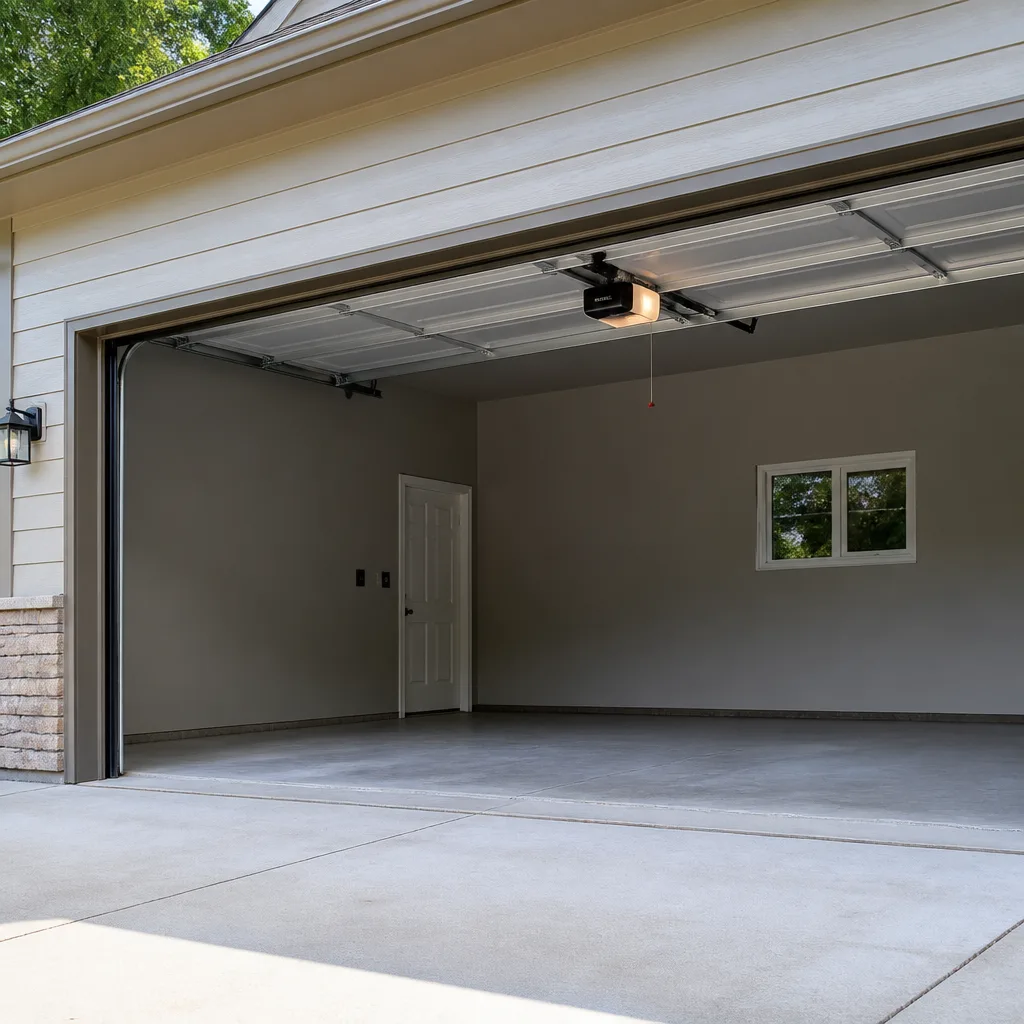
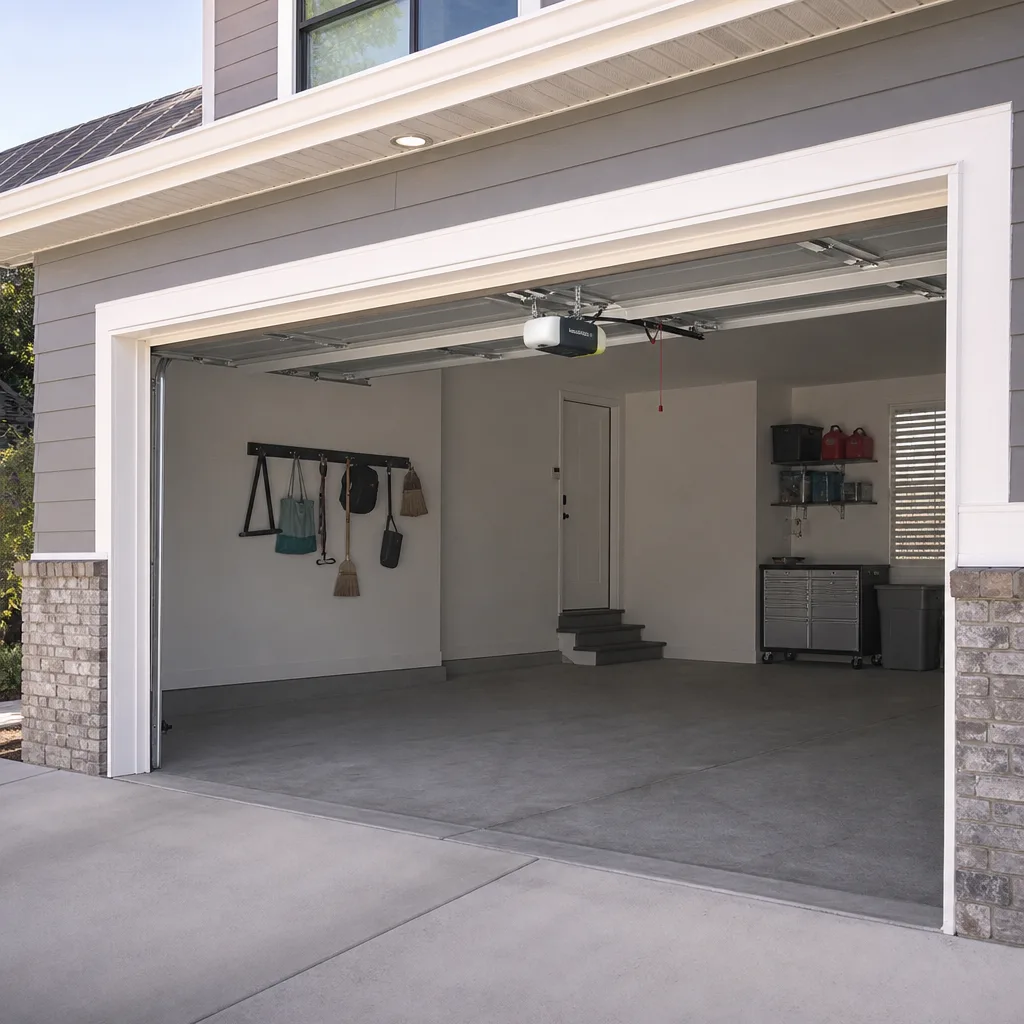
 Before
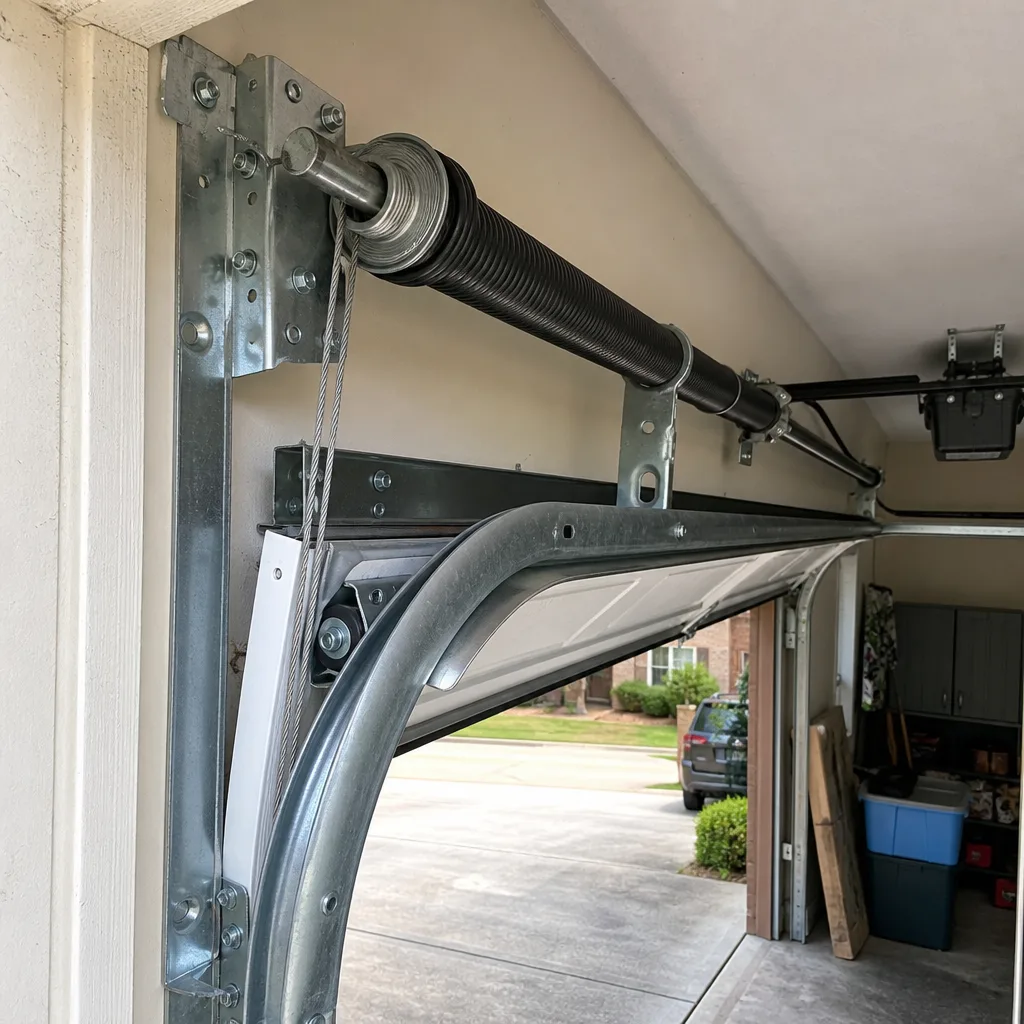 After
After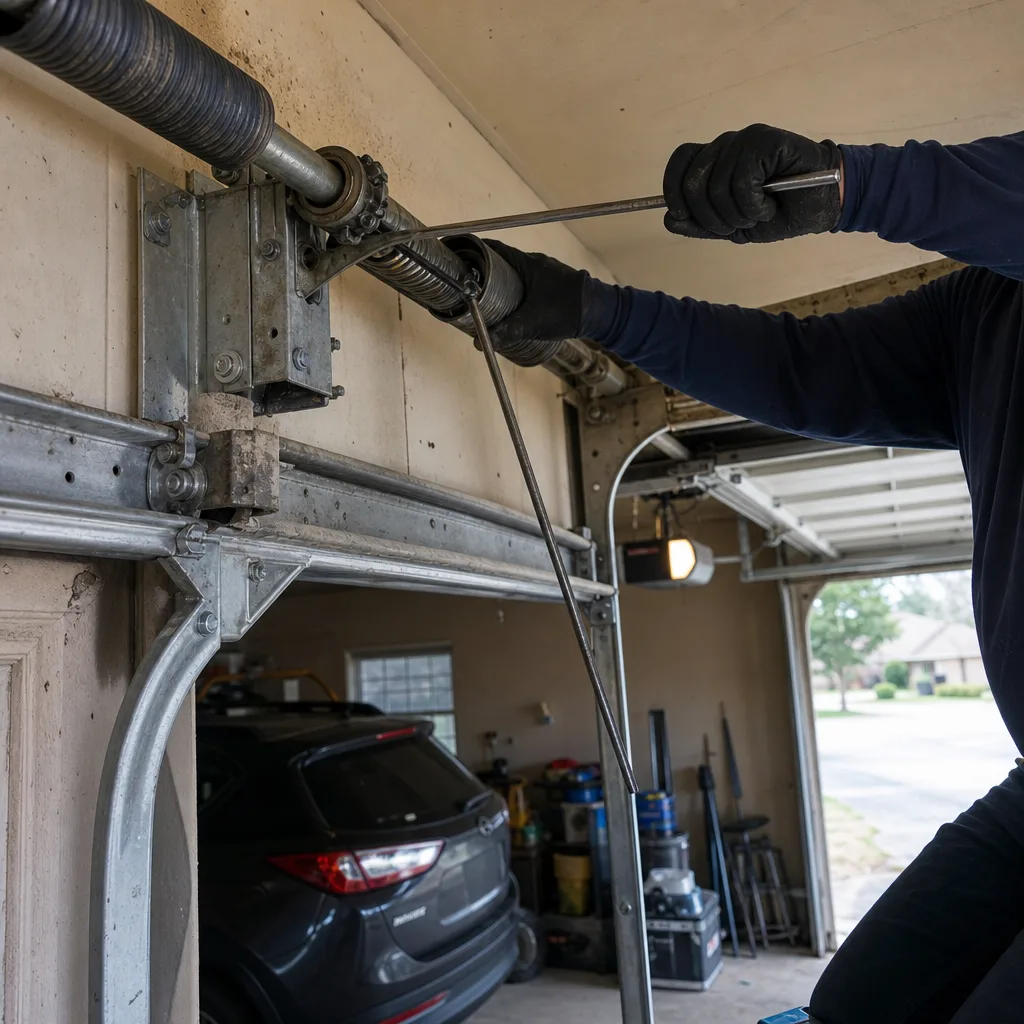 Before
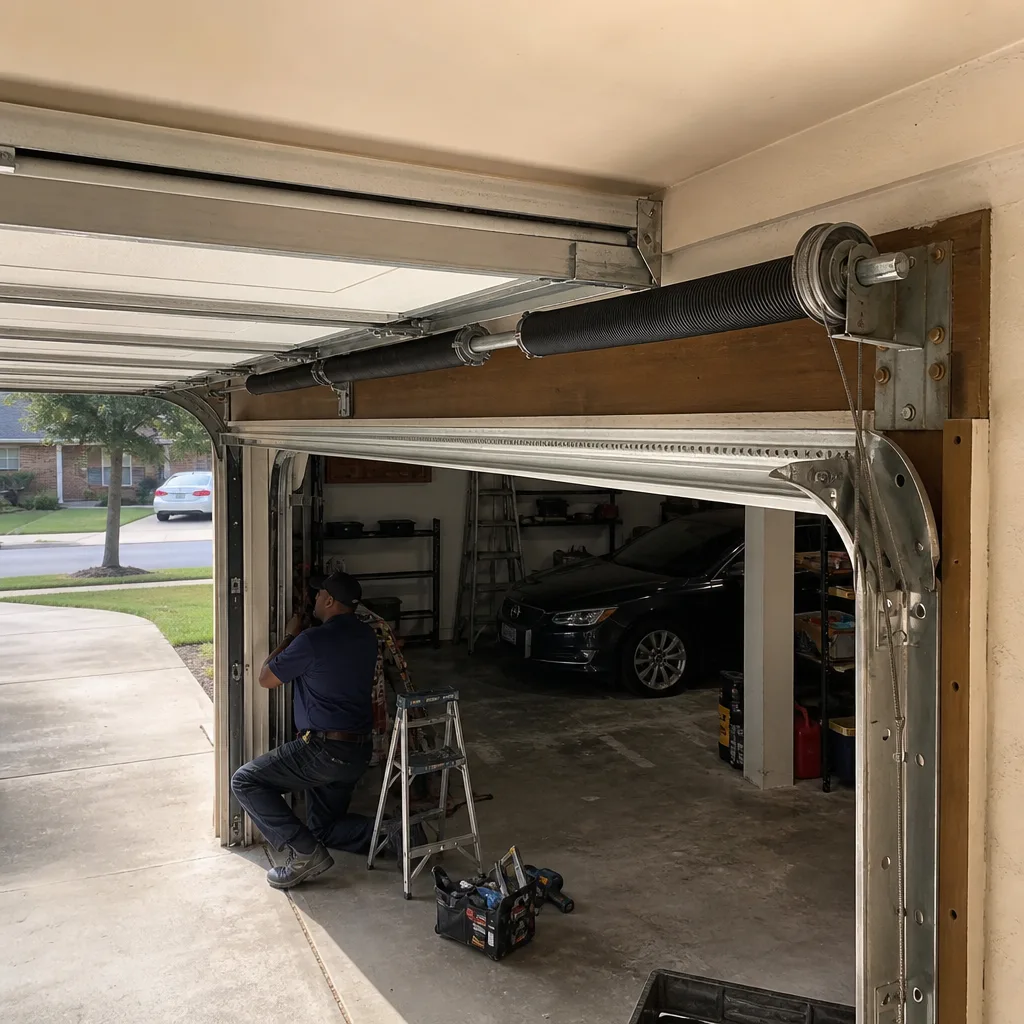 After
After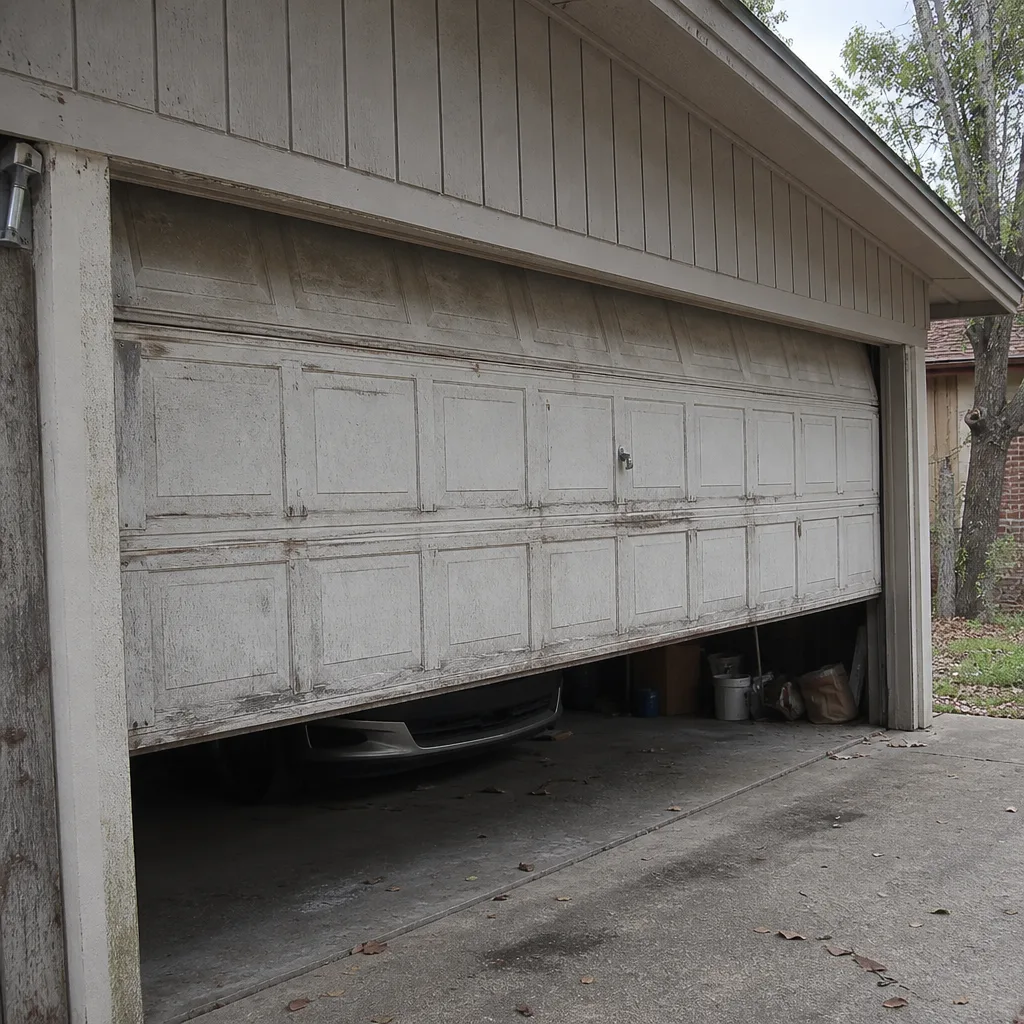 Before
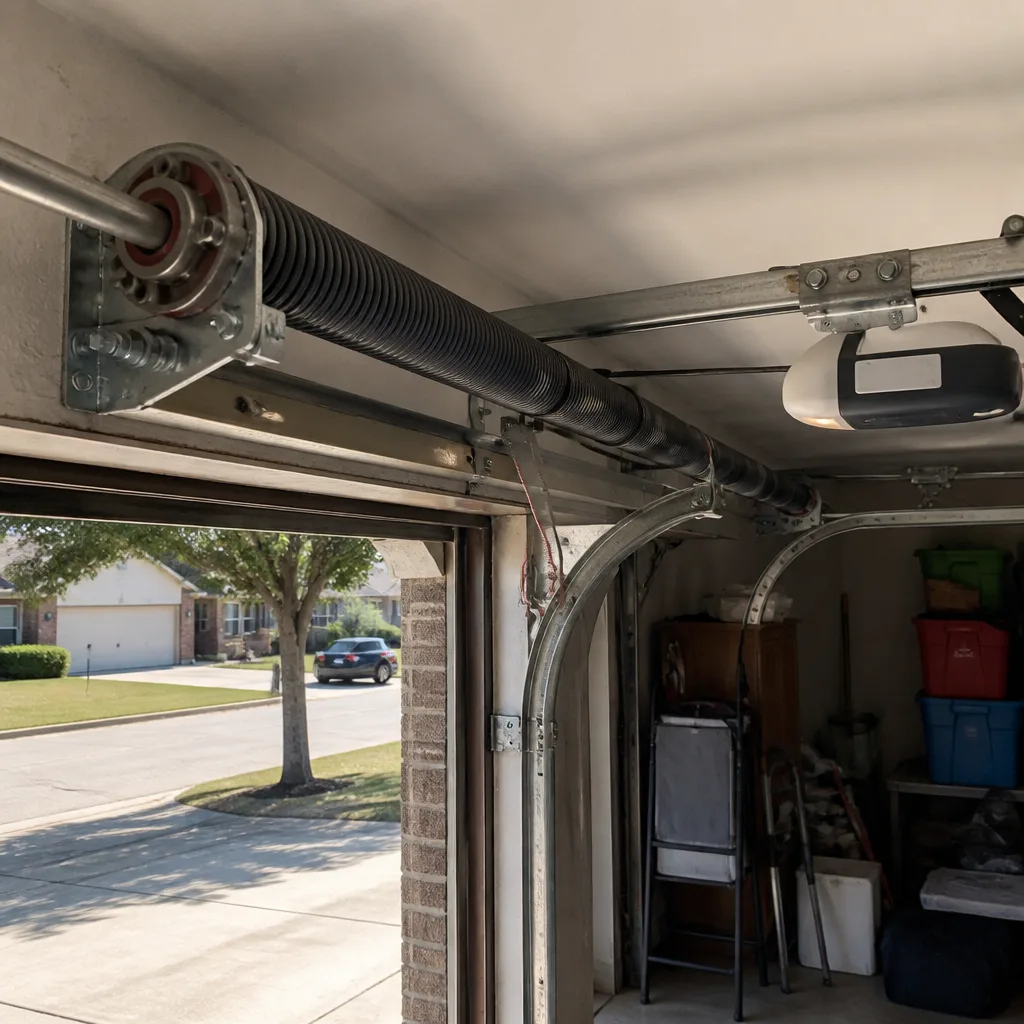 After
AfterThe Complete Guide to Garage Door in Spring
Montgomery and Harris County soil shifts up to two inches seasonally - enough to knock a garage door frame out of square without touching the opener or springs. In Spring, that movement is constant, invisible, and expensive if you misread the symptoms. Most homeowners we meet have already replaced a perfectly good opener or paid for unnecessary spring work because the real culprit was frame drift hiding in plain sight. This guide maps how Spring’s clay-heavy soil, Gulf Coast humidity, and heat load actually wear on each part of your door system. You’ll learn which materials survive here, which repairs are worth doing yourself, and when a shifting foundation means you need a technician who understands local ground conditions, not just wrenches.
Quick Answer
A well-maintained residential garage door in Spring, TX should last 15-30 years depending on material, but local clay soil movement and humidity cycles create specific failure patterns: frame misalignment from seasonal ground shift, accelerated spring fatigue from heat load, and moisture damage to wood or low-gauge steel components. The most cost-effective protection is annual inspection of tracks, springs, and weather seals, plus choosing materials rated for Gulf Coast conditions.
Table of Contents
- How Spring’s Expansive Clay Soil Affects Your Garage Door Frame
- Which Door Materials Survive Spring’s Humidity Cycles
- Gulf Coast Heat and Torsion Spring Life Expectancy
- Component-by-Component: Your Garage Door System Explained
- What “One-Visit Repair” Actually Requires
- Seasonal Maintenance for Spring Homeowners
- Common Mistakes to Avoid
- When to Call a Professional
- Frequently Asked Questions
How Spring’s Expansive Clay Soil Affects Your Garage Door Frame
The black gumbo clay that runs through Spring, Klein, and the Woodlands corridor swells when wet and shrinks when dry. That cycle repeats dozens of times per year. A garage door frame set in that soil is essentially a rigid rectangle trying to stay square while the ground beneath it breathes.
We see the results in three predictable patterns:
- Track misalignment that mimics opener failure. When the frame shifts, the vertical tracks no longer sit perfectly parallel. The rollers bind. The opener strains. The motor overheats and clicks off. Homeowners replace a $350 opener when the real fix is a $120 track realignment and frame shimming. In the Birnamwood and Augusta Pines areas, where newer fill soil hasn’t fully compacted, we diagnose this several times per month.
- Door seal gaps that invite pests and water. A frame twisted even 3/8 inch leaves daylight at one bottom corner. During Spring’s spring thunderstorms, water pools against drywall. In summer, that gap feeds humidity into the garage, accelerating rust on bottom fixtures and cables.
- Panel stress cracks in insulated doors. When the frame torques, the door panels try to flex. Steel dents. Wood splits at the stile joints. The bonded insulation in sandwich-style doors delaminates. We’ve replaced 10-year-old Clopay doors in Gleannloch Farms that should have lasted 20, solely because frame drift stressed the panel construction year after year.
The diagnostic trick is watching when symptoms appear. Clay swells most in late spring after heavy rains, then contracts through August and September. If your door worked fine in March and binds in June, suspect the ground before the hardware. We check frame square with a laser level on every service call - it takes 90 seconds and has saved our Spring customers thousands in misdiagnosed repairs.
For homes built after 2005 on former prairie land east of Kuykendahl, the risk is higher. Developers often scrape and fill, creating looser soil profiles that move more than native clay. If your driveway slab has visible cracks or your fence posts lean, your garage frame is almost certainly shifting too.
Which Door Materials Survive Spring’s Humidity Cycles
Spring sits in a tough zone for garage door materials. Relative humidity averages 75% year-round, spikes to 90% in morning summer hours, and the dew point stays above 70 for months. That combination rots wood, corrodes thin steel, and degrades lower-grade composites faster than in drier climates.
Here’s how the common options perform here:
- 24-gauge steel or heavier: The minimum we recommend for Spring. Thinner 26- or 28-gauge steel dents easily and the galvanizing wears through at panel edges within 8-10 years, starting rust from the inside. Quality 24-gauge doors from Raynor or Clopay with a baked-on polyester finish routinely last 20 years here. The upfront cost difference is roughly $200-400 on a standard 16-foot door. We’ve pulled 15-year-old Raynor steel doors out of Windrose and Champion Forest that still had clean edges.
- Garage Door Installation in Spring with wood or wood-composite: Traditional wood doors are beautiful and we install them for historic-style homes in Old Town Spring. They require resealing every 2-3 years, minimum. Skip this if you won’t maintain it. Wood composites (fiberboard cores with hardboard skins) are worse - they absorb moisture at the bottom edge, swell, and delaminate. We’ve replaced more composite doors in 10 years than any other material.
- Aluminum full-view or frame: Excellent corrosion resistance, poor dent resistance. Fine for car-collector garages where the door opens twice a day. Risky for active families in neighborhoods like Creekside Village where basketballs and bikes hit the door regularly. Aluminum frame with acrylic or glass panels is a specialty choice, not a default.
- Vinyl or fiberglass: Humidity-proof and dent-resistant, but limited style options and they fade in direct Gulf sun. The east-facing doors we service in Trails at Augusta Woods show noticeable color shift after 7-8 years. These materials also expand and contract significantly with temperature, which can stress hardware in our heat.
- Insulated sandwich construction (steel-polyurethane-steel): Worth the investment for attached garages in Spring. The R-value matters less than the structural rigidity - the bonded layers resist the panel flex that frame drift causes. We specify at least 1-3/8 inch thickness for doors over 9 feet wide.
Our practical advice: if you’re replacing a door in Spring and plan to stay in the house, buy the heaviest-gauge steel you can justify with a finish warranty of at least 15 years. The humidity will test everything else.
Gulf Coast Heat and Torsion Spring Life Expectancy
Torsion springs are the muscle of your garage door. They counterbalance 150-400 pounds of door weight so the opener doesn’t strain and you can lift manually if needed. In Spring’s climate, they face a specific enemy: sustained heat load on the metal.
Here’s the physics, simply. Torsion springs are rated in cycles - one open and one close. Standard oil-tempered springs are rated for 10,000 cycles. High-cycle springs run 25,000-50,000. But those ratings assume moderate temperatures. When a spring sits in a garage that reaches 110°F in August, the metal undergoes thermal fatigue beyond the mechanical cycling. The molecular structure degrades faster. We’ve measured springs in Spring garages that failed at 7,000 cycles when they should have reached 10,000.
The math on cycles matters for planning. A door used four times daily burns through 10,000 cycles in about 7 years. In Spring’s heat, expect 5-6 years from standard springs. For households with teenagers or home businesses where the door opens 8-10 times daily, that drops to 3-4 years.
Three local factors push springs harder:
- West and south-facing garages. Afternoon sun in neighborhoods like Lakewood Forest and Fox Hollow hits the door directly. The metal tracks reach 140°F. The spring, mounted on the header above, sits in a convection oven of rising heat. We see 20-30% faster fatigue on these orientations.
- Uninsulated or unventilated garages. No ridge vent, no exhaust fan, no insulation in the roof deck. The garage becomes a heat sink. Springs, cables, and opener electronics all suffer. A $200 attic vent fan pays for itself in extended component life.
- Oversized or overweight doors. Custom wood doors, heavy glass panels, or multiple layers of old paint add weight. The spring must work harder per cycle. We spec higher wire diameter or extended lifespan springs for these applications - not because we want to sell more, but because a standard spring will fail early and damage the door when it goes.
Spring failure is dangerous. When a torsion spring breaks, it releases stored energy instantly. The sound is like a gunshot. The door slams down if open, or becomes dead weight if closed. Do not attempt to operate the door or repair the spring yourself. The wound torque can cause serious injury. Our technicians carry wound and unwound spring sets for all common door sizes, and we match the spec to your door’s actual weight, not just its dimensions.
We also track spring batch quality. Some imported springs we’ve encountered in Spring homes failed within 18 months due to inferior steel. We source our torsion springs from U.S. manufacturers with certified wire, and we mark every installation date on the winding cone so we can warranty accurately.
Component-by-Component: Your Garage Door System Explained
When you call about a problem, precise description saves diagnostic time and gets the right parts on the truck. Here’s the full system, top to bottom, with what fails and what it looks like when it does.
The Spring System
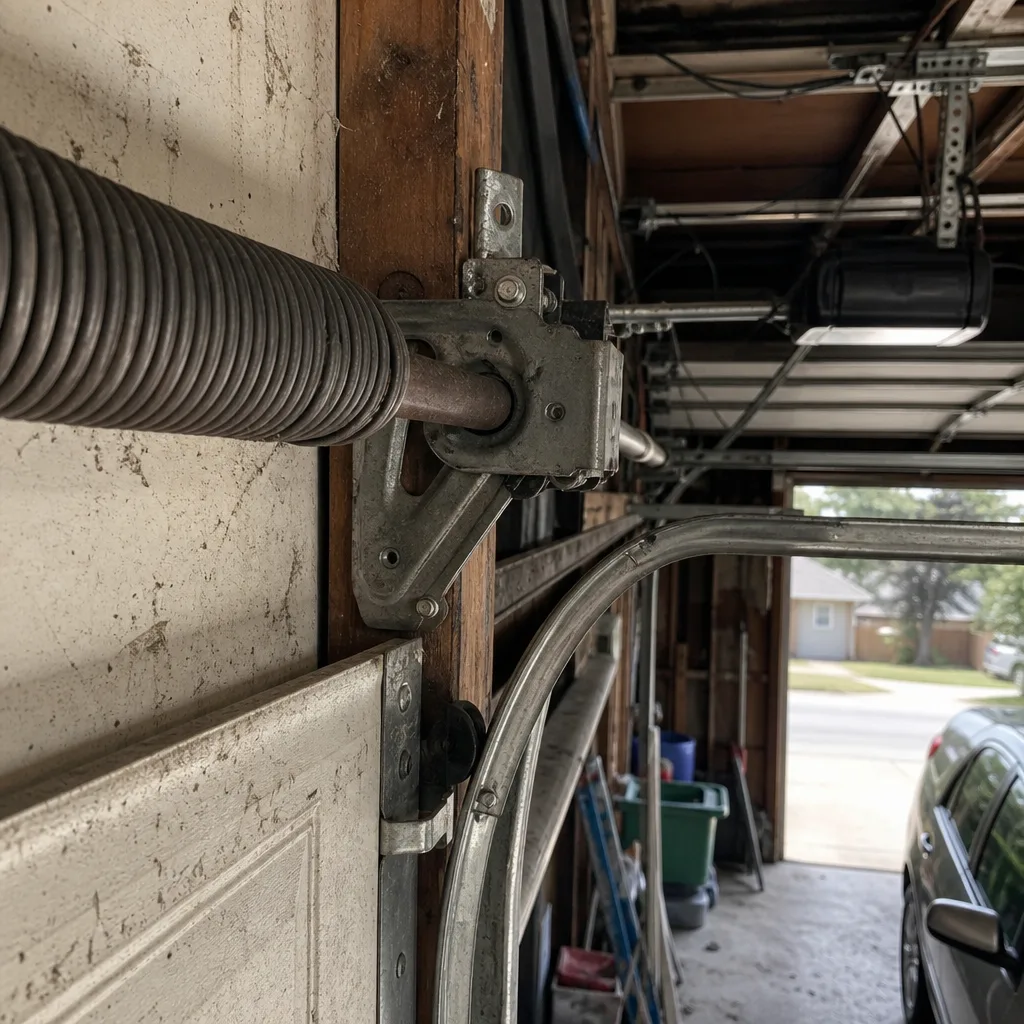
Torsion springs mount on a steel shaft above the door opening. Extension springs (older or lighter doors) run parallel to the horizontal tracks. Torsion is standard now for doors over 8 feet wide. You have one spring for lighter doors, two for heavier or wider units.
Failure signs: A 2-3 inch gap in the coil where the spring broke. Door feels “heavy” to lift manually. Opener strains or reverses. Loud bang from the garage, often at night when temperature shift stresses the metal.
Spring maintenance: Light silicone lubrication on the coils annually. Never grease - it attracts dust and grit. We include this in our Garage Door Repair in Spring tune-up service.
The Opener and Drive System
The motor unit mounts to the ceiling and drives a belt, chain, or screw mechanism. Modern openers include safety sensors, force-limiting logic, and rolling-code remotes.
Failure signs: Motor runs but door doesn’t move (stripped gear or broken coupler). Door reverses immediately after touching floor (travel limit drift). Remote works intermittently (logic board or antenna issue). Grinding noise from the rail (dry or worn drive gear).
We install and service LiftMaster, Chamberlain, and Genie openers, and we’re factory-familiar with their diagnostic codes. A 15-year-old chain-drive opener in Spring humidity has different issues than a 3-year-old belt drive with smart-home integration.
The Track and Roller System
Two vertical tracks guide the door up. The horizontal curve (radius) transitions to ceiling-mounted tracks. Rollers ride inside, typically steel with ball bearings or nylon wheels.
Failure signs: Door binds or jerks in the same spot (bent track or flat-spotted roller). Squealing or grinding (dry bearings, worn rollers). Door sits crooked when closed (track out of parallel, often from frame shift). Roller pops out of track (worn roller stem or impact damage).
Standard 2-inch rollers last 8-10 years. We upgrade to 13-ball bearing nylon rollers on most replacements - they run quieter and handle the humidity better than unsealed steel bearings.
The Cables and Drums
Lift cables attach to the bottom corners and wind around drums at the spring shaft ends. They do the actual lifting; the spring just balances the weight.
Failure signs: Frayed or rusted cables (visible when door is open). Door rises unevenly (cable slipped on drum, or drum set screw loose). Cable off the drum entirely (spring broke on one side, or impact dislodged).
Cables under tension are hazardous. A frayed cable can snap without warning. We replace cables in matched pairs - if one is worn, the other is close behind.
The Panels and Hardware
Hinges connect panels. Struts reinforce wide doors. Handles and step plates provide manual lift points. Weather stripping seals the perimeter and between panels.
Failure signs: Cracked or split panels (impact or frame stress). Loose hinges with elongated bolt holes (wear from binding). Missing or hardened weather seal (light visible around door, water intrusion, insect entry).
Bottom weather seal is the most neglected component in Spring. It dries, cracks, and leaves a gap that lets humidity and pests in. We stock common seal profiles and can replace most in 20 minutes.
The Safety System
Photo-eye sensors mount 4-6 inches above the floor on both sides. They must align to close the circuit. The door reverses if the beam breaks.
Failure signs: Door won’t close and light blinks (misaligned or dirty sensors). Door reverses for no visible reason (sunlight interference, loose wiring, failing emitter). Sensor knocked out of alignment (bump from trash can, bike, or vehicle).
In Spring’s intense low-angle winter sun, we’ve seen sensors blinded by direct glare through the door windows. We shield or relocate these when it’s a recurring issue.
What “One-Visit Repair” Actually Requires
Every company claims fast service. Few deliver a true one-visit repair, especially in a fast-growing suburb like Spring where demand spikes and supply chains lag. Here’s what it actually takes, and why it matters for your schedule.
Diagnostic certainty before dispatch. When you call Mainspring Garage Door Co., a live person answers - not a phone tree, not an answering service. We ask specific questions: what exactly happens when you press the button? Did you hear a noise? Is the door stuck open, closed, or mid-travel? Can you lift it manually? Your answers let our technician pre-diagnose and load the right parts before leaving the shop.
Inventory depth on the truck. Our service vehicles carry torsion springs in 20 wire sizes and 15 length increments. We stock complete sets of rollers, hinges, cables, drums, weather seal profiles, and opener logic boards for LiftMaster, Chamberlain, Genie, and Raynor. We also carry temporary bracing for doors stuck open in severe weather. What we don’t have on the truck, we can pull from our Spring warehouse within the hour - not next week.
Technician training and authority. Our technicians are background-checked, uniformed, and trained as journeymen under our K.E.Y.S. values code: Krafted right, Every time, Your home first, Standing behind it. They have authority to quote flat pricing on the spot, not to “call the office” or upsell later. The price is stated before any work begins. No surprises on the bill.
Why this matters in Spring specifically. This is not a compact city. From the Grand Parkway corridor to the older homes near Spring-Stuebner, drive times vary. A two-visit repair means two scheduling windows, two trips, twice the disruption. For retirees in Harmony or Gleannloch Farms who arrange their days around appointments, that’s a real cost. For families with a door stuck open and rain coming, it’s security and property risk.
We complete most repairs in a single visit because we’ve built the system to support it. The 90-Day Done Right Promise backs that up: if it’s not right, we return at no charge, in writing, with no dispute process. That’s been our standard since 1984.
Seasonal Maintenance for Spring Homeowners
Annual professional inspection catches the problems Spring’s climate creates before they become emergencies. Between visits, homeowners can handle basic monitoring safely.
What You Can Do Monthly
- Visual inspection of cables and springs. Look for rust, fraying, or coil gaps. Do not touch or adjust. Note what you see for the technician.
- Balance test. Disconnect the opener (pull the red release cord). Lift the door halfway manually. It should stay in place. If it falls or rises, the spring tension is off.
- Reversal test. Place a 2×4 flat on the floor under the door center. Close the door. It should reverse on contact. If not, the force setting needs adjustment.
- Sensor alignment check. Wipe lenses with a soft cloth. Verify both indicator lights are steady, not blinking. Kick the mounting brackets gently - they should not move.
- Lubrication of moving parts. Silicone spray on hinges, rollers, and spring coils. Wipe excess. Never lubricate the track itself - it collects grit.
What Requires a Professional
- Spring tension adjustment or replacement
- Track realignment after frame shift
- Opener force and travel limit calibration
- Cable replacement
- Panel replacement or structural repair
- Weather seal selection and installation for custom profiles
Our $89 Seasonal Tune-Up includes full inspection, balance check, safety system test, and lubrication. We note frame square, spring condition, and component wear so you can plan replacements before failure. For Spring homeowners over 55, the permanent 5% senior discount applies.
Common Mistakes to Avoid
- Ignoring frame shift symptoms. When the door binds seasonally, homeowners often blame the opener and replace it. The new opener strains against the same misaligned track and fails early. Check frame square first, especially if symptoms correlate with wet or dry spells.
- Buying the cheapest replacement spring. Cut-rate springs use inferior steel and fail in half the rated cycles. We’ve removed springs from Spring homes that failed at 14 months. The savings evaporate with the second service call and potential door damage.
- DIY spring replacement. Torsion springs store lethal energy. Winding bars slip. Improper tools fail. Every year, emergency rooms treat homeowners for lacerations, fractures, and worse from attempted spring work. This is not a YouTube project.
- Neglecting bottom seal replacement. That cracked rubber strip seems minor until carpenter ants establish a trail, or rainwater wicks into drywall and breeds mold. In Spring’s humidity, a $25 seal prevents $2,000 in pest and moisture damage.
- Over-lubricating the track. Grease or oil on the track attracts airborne grit, which acts like grinding compound on rollers and bearings. Lubricate hinges, springs, and rollers only. Keep the track clean and dry.
- Installing an opener without checking door balance. A new opener on an unbalanced door works too hard, overheats, and fails prematurely. We balance every door before opener installation. The opener should lift, not fight.
- Waiting for total failure. A noisy door, intermittent reversal, or slow operation are early warnings. Address them in the dry season when scheduling is flexible, not during the first cold snap when every company is backed up and you’re stuck with a door that won’t close.
When to Call a Professional
Call when safety systems malfunction, springs show wear, cables fray, or the door operates unpredictably. Call immediately if the door is stuck open and you cannot secure your home. Call when you’ve noticed gradual changes - slower operation, new noises, seasonal binding - that suggest developing problems.
Specifically in Spring, call when your door symptoms track with weather patterns. Frame shift from clay soil movement, heat-accelerated spring fatigue, and humidity damage to seals and hardware are local conditions that generic troubleshooting misses. A technician who knows Spring’s soil, climate, and construction patterns diagnoses faster and fixes right the first time. For more guides & resources on keeping your door running smoothly, explore our blog.
Mainspring Garage Door Co. home offers free estimates in Spring. Carl Dutton and our team answer the phone live, 24/7, including nights, weekends, and holidays. Call (936) 280-5668 to describe what you’re seeing. We’ll tell you honestly whether it’s urgent, what it likely involves, and what it costs before we dispatch.
Frequently Asked Questions
A quality steel door properly maintained should last 20-30 years in Spring, though local humidity and clay soil movement can shorten that for wood or thin-gauge materials. The key variables are material choice, maintenance consistency, and whether frame alignment issues are caught early. Call (936) 280-5668 for an assessment of your specific door’s condition.
Spring’s expansive clay soil swells with spring and early summer rainfall, then contracts through late summer and fall. That seasonal ground movement shifts garage door frames, causing tracks to bind in warm months when the soil is most active. The door isn’t the problem - the frame geometry is. A technician can check frame square and shim or adjust tracks to compensate. This is one of the most common misdiagnoses we correct in Montgomery County.
Standard torsion spring replacement in Spring typically runs $180-$340 depending on door size, spring specification, and whether one or both springs need replacement. We quote the flat price before any work begins, and our $50 Off Any Repair Over $250 applies. High-cycle springs or dual-spring systems on heavier doors cost more upfront but last proportionally longer. Call (936) 280-5668 for an exact quote - estimates are free.
Mechanically capable homeowners can sometimes install a basic opener on a properly balanced, standard door. However, opener installation requires precise force and travel limit adjustment for safe operation, and Spring’s humidity and frequent power fluctuations stress electronics in ways that benefit from professional calibration. We also verify door balance, sensor alignment, and safety reversal as part of every installation. For the $200-400 installation cost, the warranty coverage and safety verification are worth it.
Our $89 Seasonal Tune-Up includes full inspection of springs, cables, rollers, hinges, tracks, and weather seal; door balance test; opener safety reversal and force test; photo-eye alignment and cleaning; lubrication of all moving parts; and a written condition report with replacement recommendations if needed. We check frame square as standard practice, which many competitors skip. The tune-up takes 45-60 minutes and includes our 90-Day Done Right Promise on any adjustments made.
Watch for these signs: the door binds or rubs in the same spot seasonally; weather seal gaps appear at one bottom corner but not the other; the door sits visibly crooked when closed; or the opener strains and overheats despite recent service. Check your driveway and exterior walls for cracks, and note whether fence posts lean. These all indicate ground movement that likely affects your garage frame. We diagnose this with laser measurement on every service call.
The Bottom Line
Garage doors in Spring face a specific set of challenges that generic advice misses. The clay soil moves frames. The humidity attacks materials. The heat load fatigues springs faster than rated. The right response is local knowledge applied systematically: choosing materials rated for Gulf Coast conditions, inspecting annually for frame drift and component wear, and building a relationship with a shop that stocks parts and stands behind the work.
We’ve served Spring and the surrounding communities since 1984. Our trucks carry the inventory to finish most jobs in one visit. Our technicians are trained journeymen, not subcontractors. Our price is flat, stated upfront, and backed in writing. If you’re seeing symptoms - seasonal binding, new noises, slower operation, or a spring that’s reached its years - call before it becomes an emergency. A square deal, done right, with no surprises on the bill. That’s what we’ve built Mainspring Garage Door Co. to deliver.
Written by Carl Dutton, Owner at Mainspring Garage Door Co., serving Spring since 2016.