
Last updated September 10, 2026
Full 25-point door and opener safety check with every visit - springs, cables, rollers, tracks, and your LiftMaster or Chamberlain opener included
You get a price before we start. It does not change when the truck arrives.

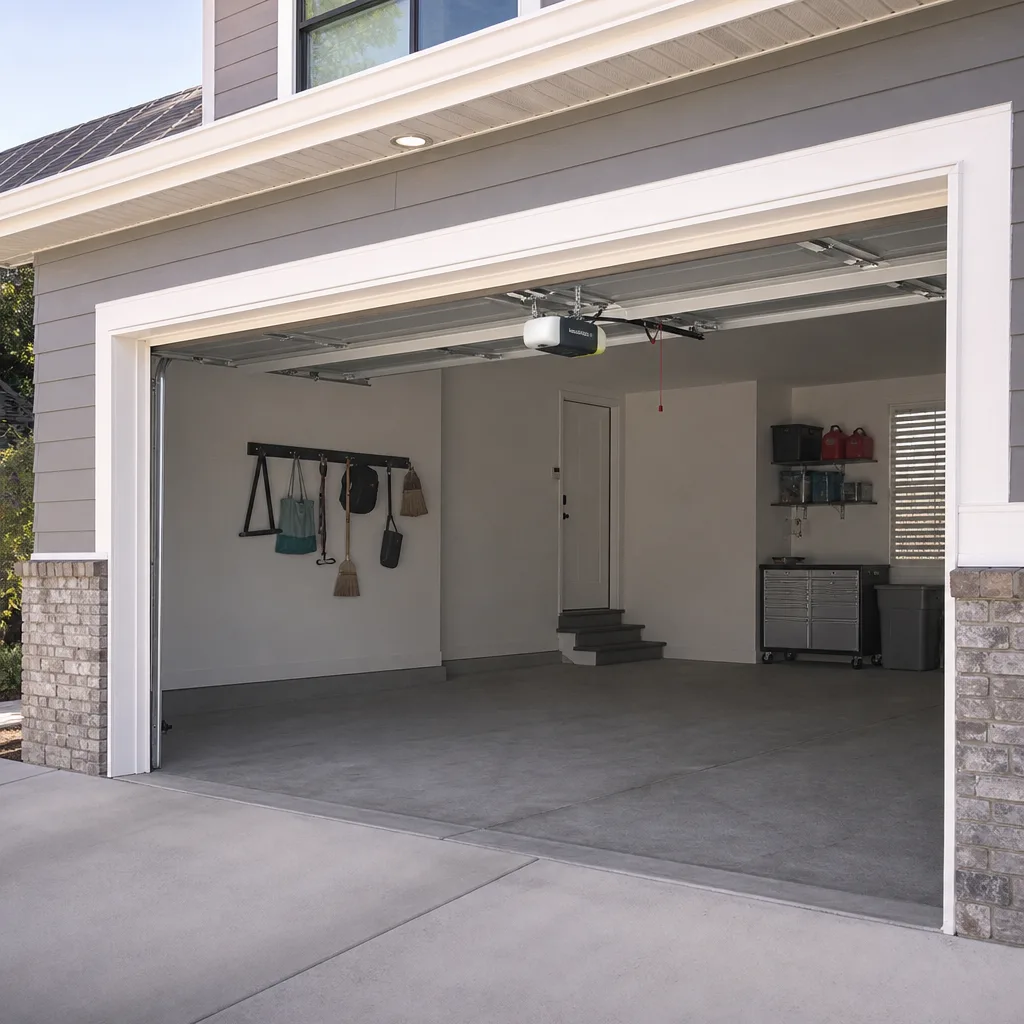
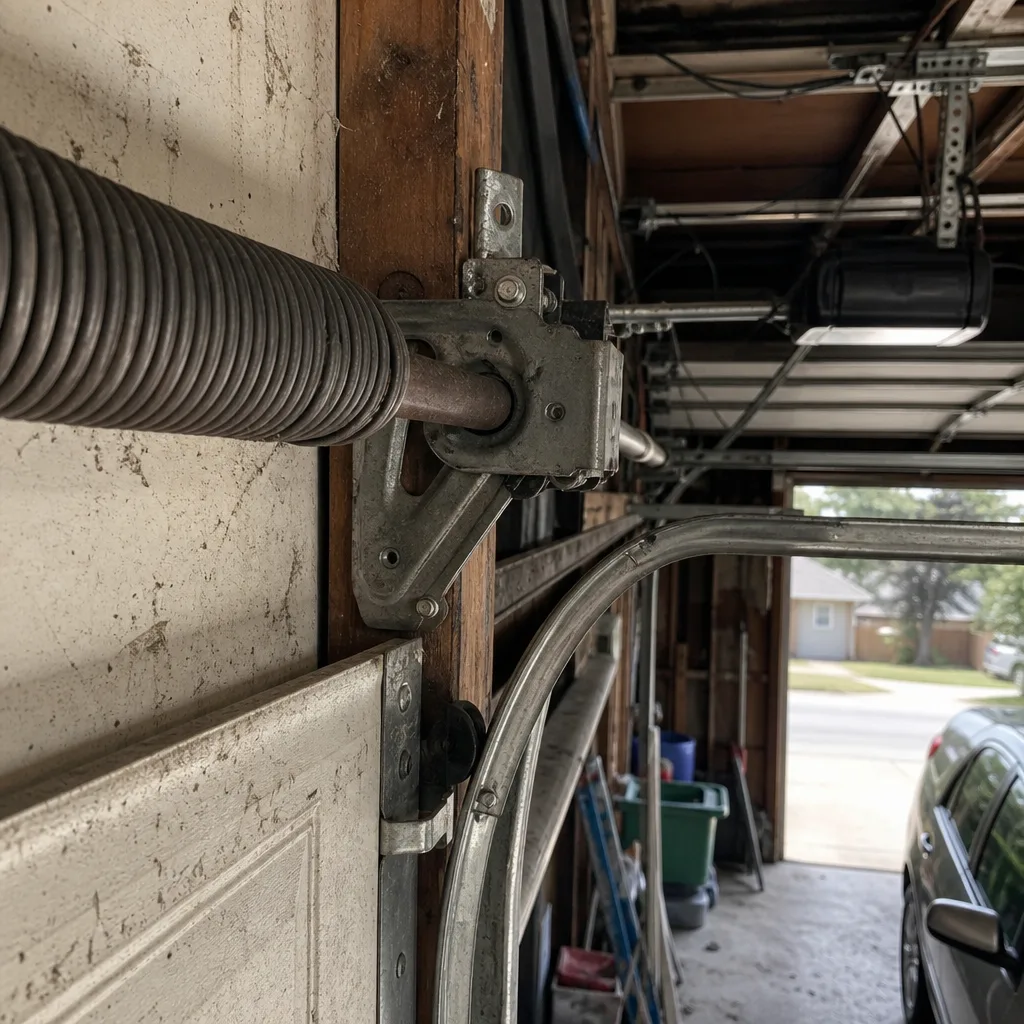 Before
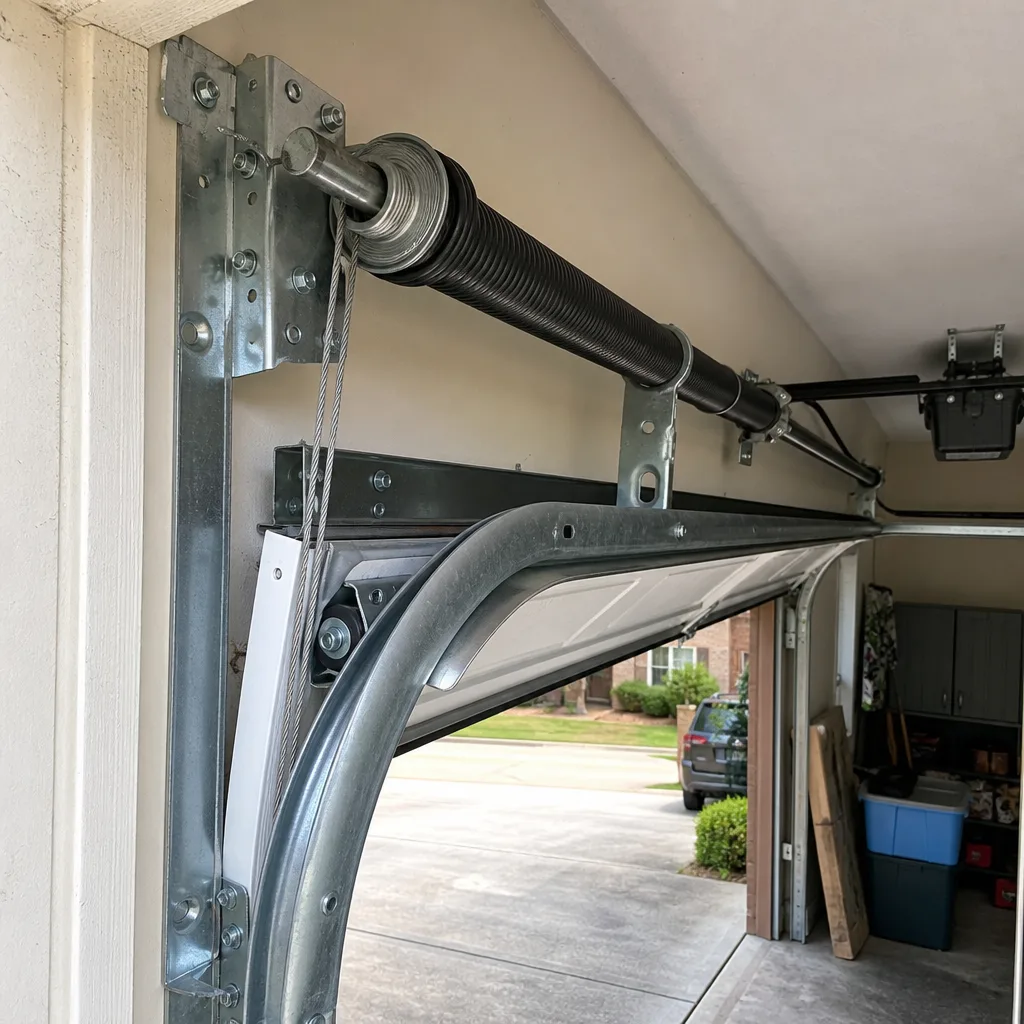 After
After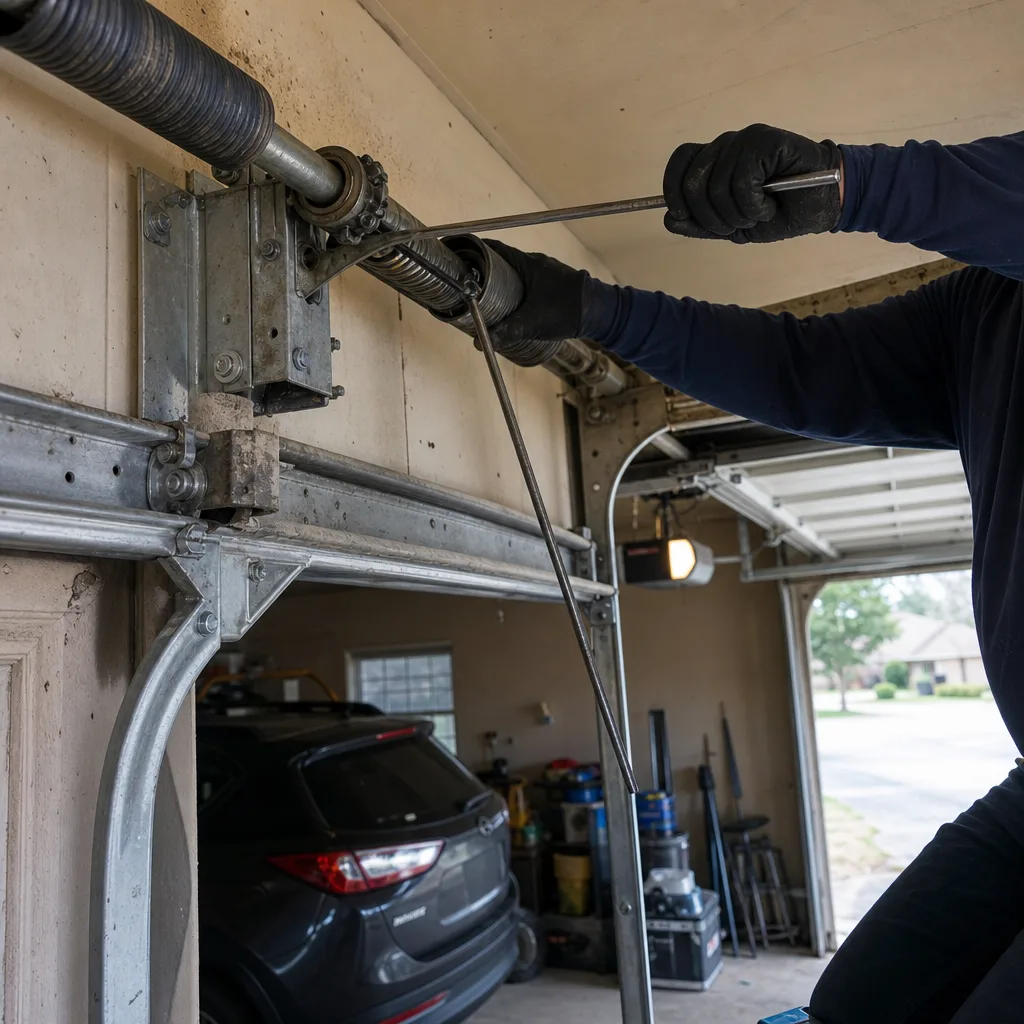 Before
 After
After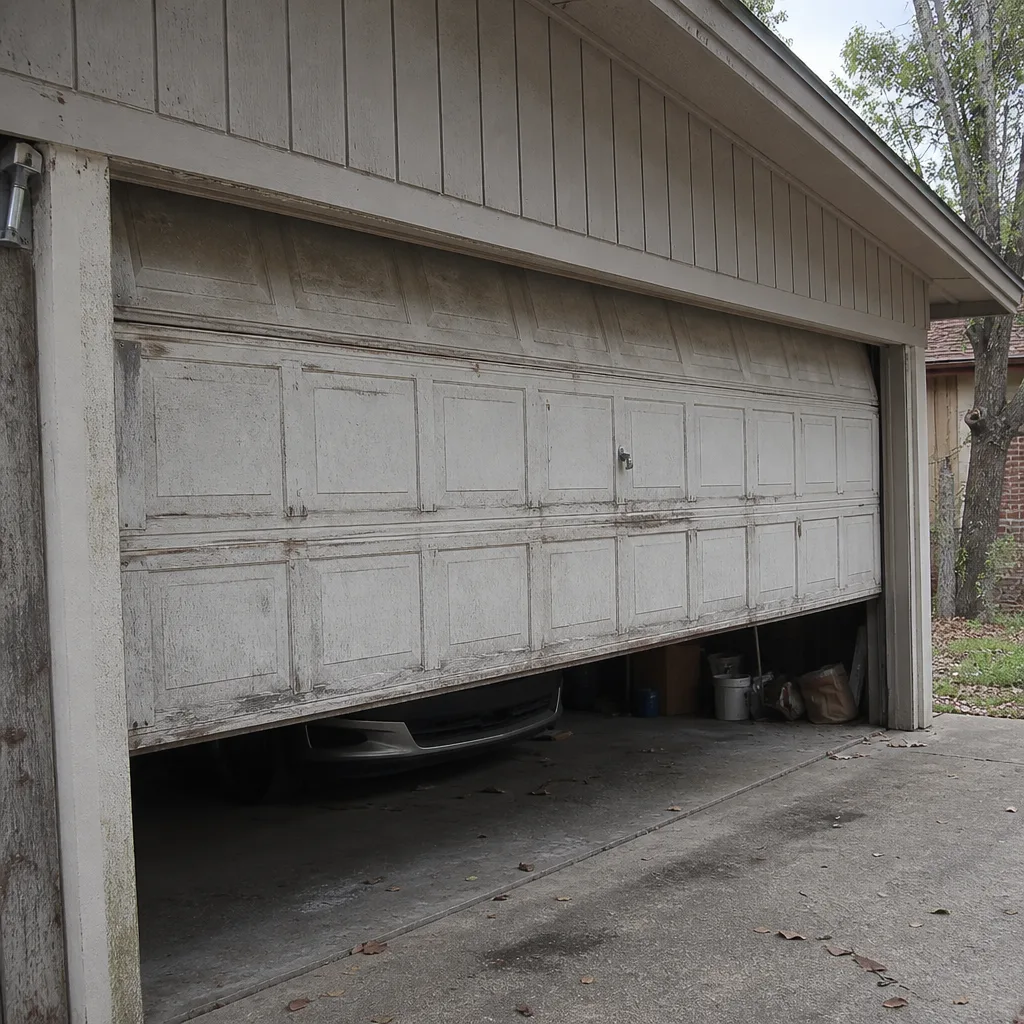 Before
 After
AfterDIY vs Professional Garage Door: The Spring Homeowner’s Decision Guide
Torsion springs store roughly 100 foot-pounds of torque when wound. That is enough energy to fracture a wrist or break a jaw if a winding bar slips. The YouTube tutorials don’t say that number aloud, and the home improvement blogs rarely mention that a garage door spring replacement sends roughly 1,600 Americans to the emergency room every year. Here in Spring, where summer humidity swells wooden door panels and clay soil shifts foundations out of level, the question is not whether you are handy. It is whether the task you are considering has a bad outcome of a crooked photo eye, or a bad outcome of a snapped spring at face level. This guide draws that line clearly. You will learn exactly which garage door jobs are reasonable for a homeowner with basic tools, which jobs carry low but real risk, and which jobs should never be attempted regardless of skill level. We will also cover the true cost comparison, including the value of your time and the hidden expense of a second call when a DIY fix fails.
Quick Answer
Most Spring homeowners can safely handle lubrication, sensor alignment, remote reprogramming, and weather seal replacement, as outlined in our Garage Door Repair Maintenance Checklist for Spring Homeowners. Jobs requiring basic tools but carrying real risk include roller replacement on extension spring systems and minor track adjustment. Torsion spring replacement, cable work on wound springs, and structural panel repair should never be DIY’d. The break-even point for professional service typically falls between $180 and $340 for standard repairs, with the added value of same-day completion, written warranty, and zero personal injury risk.
Table of Contents
- The Energy Stored in Your Springs: What the Tutorials Don’t Teach
- Safe DIY Tasks: What You Can Handle Without Special Tools
- Risky but Possible: Jobs for the Experienced Homeowner
- Never DIY: Tasks That Require Professional Equipment and Training
- The True Cost Comparison: Beyond the Sticker Price
- Spring, Texas-Specific Factors: Climate, Soil, and Code
- What to Tell Your Technician When You’ve Attempted DIY
- Tools and Parts: What You’ll Need vs. What We Carry
The Energy Stored in Your Springs: What the Tutorials Don’t Teach
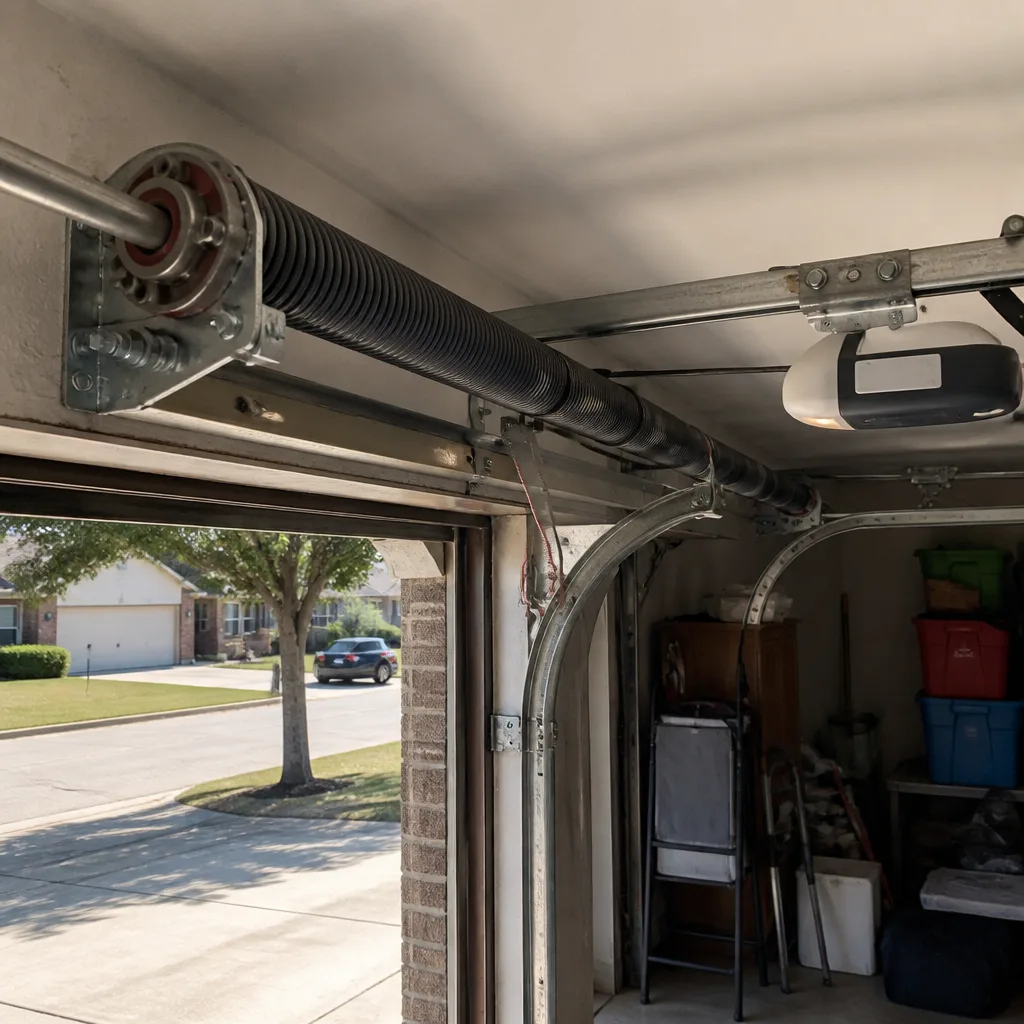
A standard seven-foot residential garage door weighs between 150 and 250 pounds. The springs do not just assist the opener. They carry the entire weight of the door so the motor only needs to manage about 10 to 15 pounds of force. When the door is closed, torsion springs are fully wound and storing that potential energy. Extension springs, common on older homes in Spring neighborhoods like Lexington Woods and Windrose, are stretched to their limit when the door is down.
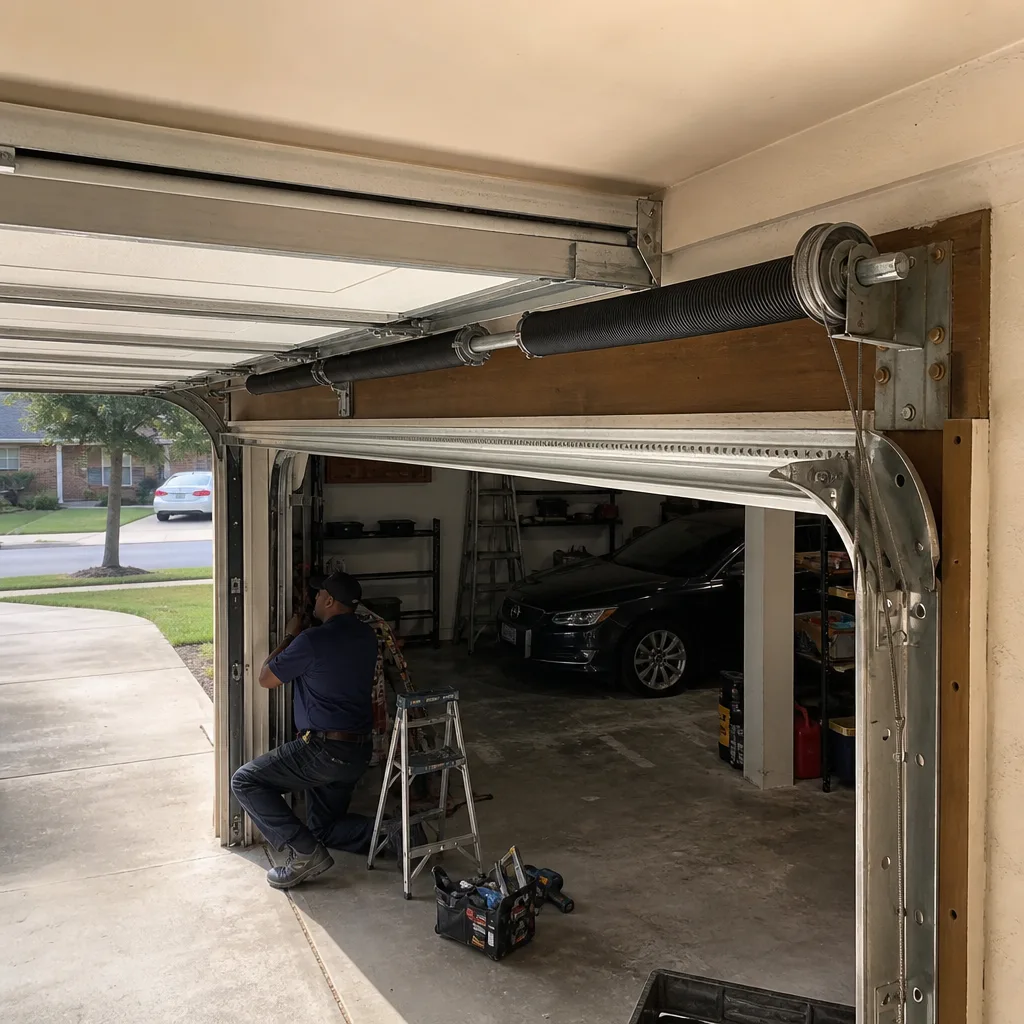
The critical number is this: a wound torsion spring holds roughly 100 foot-pounds of torque. For context, that is comparable to the recoil of a high-powered rifle. When a winding bar slips or a spring breaks during installation, that energy releases in milliseconds. The bar becomes a projectile. The spring fragments become shrapnel. We have seen winding bars embed themselves in garage drywall. We have seen homeowners who attempted their own spring replacement spend their afternoon in the emergency room at Memorial Hermann The Woodlands instead of finishing the job.
This is not theoretical. In our 42 years of service, we have been called to finish a homeowner’s DIY spring job more times than we can count. The pattern is consistent: the tutorial made it look straightforward, the parts were available online, and the homeowner had successfully replaced a faucet and installed a ceiling fan. Garage door springs are different. The risk is not a leak or a wobbly fixture. It is sudden, uncontrolled release of stored mechanical energy.
The tutorials also rarely explain spring matching. A torsion spring must be wound to a specific number of quarter-turns based on door weight, drum size, and cable length. Wind it too tight and the door jumps open, straining the opener. Wind it too loose and the door drifts down, creating a safety hazard. The color-coding on springs indicates wire gauge and length, not winding count. Getting this wrong means the door will not balance, the opener will fail prematurely, and you will be calling for a second visit to correct the first.
We are not suggesting that homeowners are incapable. We are stating that this particular task requires tools most people do not own, knowledge that takes months to acquire, and carries consequences that are permanent. The line between capable and unwise is not intelligence or handiness. It is the specific physics of the system you are working on.
Safe DIY Tasks: What You Can Handle Without Special Tools
There are genuine maintenance and minor repair tasks that a Spring homeowner can perform safely with common household tools, and you can find more guides & resources on our blog to help. These tasks do not involve stored energy, heavy lifting, or structural load. They are also the tasks that, when performed regularly, prevent the expensive emergency calls.
Lubrication of Moving Parts
Every six months, apply a silicone-based spray lubricant to the rollers, hinges, and bearing plates. Do not use WD-40 as a lubricant; it is a solvent that strips existing grease. In Spring’s humid subtropical climate, metal components corrode faster than in drier regions. A quick lubrication takes ten minutes and extends component life by years. We include this as part of our garage door repair in Spring tune-up service, but it is also reasonable to do yourself.
Photo Eye Alignment
Modern openers, including LiftMaster and Chamberlain models, use infrared photo eyes to prevent the door from closing on obstacles. When these fall out of alignment, the door reverses immediately or refuses to close. The fix is usually simple:
- Check that both LED lights on the sensors are lit. One green, one amber is typical.
- If one is off or blinking, loosen the wing nut, adjust the bracket until both lights steady, then retighten.
- Clean the lenses with a soft cloth. Spider webs and pollen, abundant in Spring’s wooded lots, are frequent culprits.
- Verify nothing is blocking the beam path. Storage bins, bicycles, and garden tools often shift into the line of sight.
Remote and Keypad Reprogramming
After power outages or battery replacement, remotes and keypads sometimes lose pairing. The process varies by manufacturer. For most Genie and LiftMaster units, press the learn button on the motor housing, then press the remote button within 30 seconds. The opener light will flash to confirm. Consult your owner’s manual for the specific sequence; most are available as PDFs if the paper copy is lost.
Weather Seal Replacement
The rubber seal at the bottom of the door cracks and hardens over time, allowing water, dust, and pests into the garage. Replacement seals slide into a retainer channel and require no tools beyond a utility knife and possibly a flathead screwdriver to work the new seal into place. Measure your door width precisely; seals are sold by the foot and cut to length.
Manual Disconnect and Re-engagement
When power fails, the red emergency release cord disconnects the door from the opener so you can lift manually. To re-engage, pull the cord toward the opener or run the opener until the trolley reconnects. This is basic operation, not repair, but many homeowners have never done it until an emergency. Practice once when the power is on so you are prepared.
These tasks share common characteristics: no stored energy to release, no heavy components to support, and mistakes are reversible without professional intervention. They are also the foundation of preventive maintenance that keeps your door running quiet and reduces wear on the opener.
Risky but Possible: Jobs for the Experienced Homeowner
Some garage door tasks sit in a middle zone. They are technically possible for a determined homeowner with decent tools and mechanical aptitude, but they carry genuine risk of property damage or injury if executed poorly. We do not encourage these as DIY projects, but we recognize that some homeowners will attempt them regardless. If you fall into that category, understand the risks precisely.
Roller Replacement on Extension Spring Systems
Extension springs run parallel to the horizontal tracks and stretch as the door closes. Unlike torsion springs, they do not store energy in a winding. However, they are under tension when the door is open or partially open. Replacing a roller requires securing the door in the fully open position with locking pliers or C-clamps on the track, then working on one roller at a time. The risk is that the door drops if not secured properly, or that a spring slips from its safety cable. We have seen doors come off tracks in Gleannloch Farms and Cypresswood because a homeowner removed two rollers simultaneously to save time.
Minor Track Adjustment
Vertical and horizontal tracks can shift slightly due to foundation settling, common in Spring’s expansive clay soils. A door that rubs on one side or makes a grinding noise may need track realignment. This requires a level, wrenches, and patience. The tracks must remain plumb and parallel; even a quarter-inch variance causes binding and premature wear. The risk is overtightening and stripping lag bolts, or bending the track itself. A bent track must be replaced, not straightened, and that requires a professional with the correct gauge of replacement track on the truck.
Hinge Replacement
Hinges connect door panels and allow the door to bend around the track curve. They wear and can crack, especially on older steel doors in Spring’s heat. Replacement is straightforward if you replace hinges one at a time, maintaining door alignment. The risk is removing multiple hinges at once, causing the door to fold or panels to separate. The door must be fully closed and ideally clamped to prevent movement.
The common thread in these tasks is that mistakes are costly but usually not catastrophic. A door off its track is a headache and a service call, not an emergency room visit. However, the time investment is significant. What a homeowner accomplishes in four hours on a Saturday, our technicians complete in forty minutes with the right tools and experience. Factor your time at whatever value you place on a half-day of weekend, then compare to our flat-rate pricing.
Never DIY: Tasks That Require Professional Equipment and Training
There are three categories of garage door work that no homeowner should attempt, regardless of tool collection or mechanical confidence. The consequences of error are severe and immediate.
Torsion Spring Replacement
We have addressed the physics. The additional factor is tool specificity. Torsion springs require winding bars, solid steel bars inserted into the cogs of the winding cone to add or release tension. These are not screwdriver substitutes. They are 18-inch lengths of hardened steel, typically half-inch or seven-sixteenths diameter, inserted and removed in a specific sequence while maintaining hand position. A slip at the wrong moment is not a bruise. We carry multiple sets because even professionals wear them out.
Spring selection is equally specialized. The correct spring is determined by door weight, height, track radius, and cable drum type. An incorrect spring causes immediate balance problems and premature opener failure. We weigh doors on every spring replacement to ensure the match is exact. Homeowners guessing based on door dimensions or online calculators get it wrong more often than right.
Cable Replacement on a Wound Spring
Cables wind and unwind on drums as the door moves. When a cable frays or snaps, it must be replaced with the spring unwound. Attempting cable work on a wound spring is attempting to restrain a loaded system with your hands. The cable under tension can slice skin to the bone. We have seen this injury. It is not rare.
Structural Panel Repair or Replacement
Steel door panels with significant dents or creases have compromised structural integrity. A panel replacement requires disassembling the door section by section, which means managing spring tension and door weight simultaneously. Wooden door panels, still common in older Spring homes near Old Town Spring, swell with humidity and rot at the bottom where water collects. Repairing structural damage without understanding load distribution leads to doors that warp, bind, or fail entirely.
These three tasks require the equipment we carry on every truck: winding bars, spring inventory in multiple wire sizes, cable sets, specialized clamps, and door weighing scales. They require the training our technicians receive as journeymen. Most importantly, they require the judgment that comes from performing these operations thousands of times, which lets a professional recognize when a spring is about to slip or a cable is frayed beyond visible inspection.
Our garage door installation in Spring team encounters doors that were damaged by well-intentioned DIY attempts. The repair cost is always higher than the original professional service would have been, because we must correct the DIY work before addressing the original problem. The 90-Day Done Right Promise covers our work, not work performed by others before we arrive.
The True Cost Comparison: Beyond the Sticker Price
The standard DIY-vs-pro comparison focuses on parts cost versus service call cost. This is incomplete, as our Garage Door Cost Breakdown: The Spring Homeowner’s Reference for 2026 explains in full. A complete accounting includes time, risk, tool acquisition, and the probability of a second call.
Direct Cost Comparison for Common Repairs
| Task | DIY Parts Cost | Professional Service Range | Typical Time: DIY | Typical Time: Professional |
|---|---|---|---|---|
| Torsion spring replacement (single) | $40-$80 (spring only; winding bars extra) | $180-$280 | 4-6 hours first attempt | 45-60 minutes |
| Extension spring replacement (pair) | $30-$60 | $150-$220 | 2-3 hours | 30-45 minutes |
| Roller replacement (full set, 10 rollers) | $40-$90 | $120-$180 | 2-3 hours | 30-40 minutes |
| Cable replacement | $15-$30 | $140-$200 | 2-4 hours | 30-45 minutes |
| Opener repair (gear/sprocket) | $25-$50 | $180-$340 | 2-4 hours | 45-90 minutes |
| Weather seal replacement | $20-$40 | $80-$140 | 30-60 minutes | 20-30 minutes |
The table shows parts cost alone. Add tool acquisition: winding bars ($25-$40), a quality level ($30-$50), locking pliers ($20-$35), and possibly a torque wrench for opener work ($40-$80). For a one-time repair, these tools may exceed the professional service premium.
More significant is the value of time. A Spring homeowner earning $60,000 annually values a Saturday half-day at roughly $115 in opportunity cost, using standard economic assumptions. A first-time DIY spring replacement that stretches to six hours, including a trip to the hardware store for forgotten items, represents substantial hidden cost. If the repair fails and requires a professional callback, the total exceeds the original quote by a wide margin.
Risk cost is harder to quantify but most important. A trip to the emergency room, even with insurance, carries copays, lost work time, and physical recovery. The probability is low for careful individuals, but the consequence is severe. We have replaced springs on homes in Champion Forest and Auburn Lakes where the homeowner started the job, recognized the danger, and called us to finish. There is no shame in this. The shame is in finishing a dangerous job out of stubbornness.
Finally, consider warranty and follow-up. Our 90-Day Done Right Promise means if a spring we install makes noise, shifts, or fails within 90 days, we return at no charge. No parts to order, no videos to rewatch, no question of whether the mistake was yours or a defective component. That certainty has value, particularly for homeowners who have been burned by contractors before and remember it.
Spring, Texas-Specific Factors: Climate, Soil, and Code
Garage doors in Spring face conditions that differ from national averages. Understanding these local factors helps explain why professional service often saves money over time.
Humidity and Corrosion
Spring averages 75% relative humidity annually, with summer peaks above 90%. Steel components rust faster here than in drier climates. Galvanized springs last longer than oil-tempered, but many online parts retailers ship standard oil-tempered springs unless specified. We stock galvanized springs for Spring installations because the additional cost is recovered in extended service life. A homeowner ordering the default spring online receives a component that will fail sooner in our climate.
Expansive Clay Soil
The gumbo clay common in Harris and Montgomery counties expands when wet and contracts during dry spells. This cycles seasonally and causes foundation movement. Garage door frames shift slightly out of square. Tracks that were plumb in March may need adjustment by September. We see this pattern repeatedly in neighborhoods like Lakes of Cypress Forest and Harmony. A door that worked perfectly last year may bind this year due to soil movement, not component failure. Diagnosing this requires experience with local conditions, not just mechanical knowledge.
Wind Load Requirements
Montgomery County, including Spring, requires garage doors to meet wind load standards for the region’s exposure to hurricane-force winds. Replacement doors must carry appropriate wind load stickers and installation must follow manufacturer specifications for reinforcement. A DIY door installation that ignores these requirements may pass casual inspection but fail to perform in a storm, with consequences for insurance coverage and personal safety. Our garage door installation in Spring includes verification of wind load compliance on every job.
Pollen and Debris
Spring’s heavy tree pollen, particularly from pine and oak, coats photo eye lenses and clogs track lubrication. The annual yellow coating that blankets cars in March and April also affects garage door operation. Regular cleaning is more critical here than in less vegetated regions. This is preventive maintenance that homeowners can and should perform.
Local Permits for Structural Modification
Replacing a garage door on an existing frame typically does not require permit in Spring. Enlarging the opening, converting to a different door type, or structural modification of the header does-details we cover in Garage Door Permits, Codes & Inspections in TX: What You Need to Know. We handle permit research and acquisition as part of installation planning when needed. Homeowners proceeding without required permits face stop-work orders and complications at resale.
What to Tell Your Technician When You’ve Attempted DIY
Homeowners sometimes hesitate to admit prior DIY work, fearing judgment or inflated charges. At Mainspring Garage Door Co., we do not judge. We do need accurate information to protect you from unnecessary diagnostic fees and to work safely.
When you call, provide exactly two pieces of information:
- What you did. Be specific: “I replaced the bottom two rollers on the left side” or “I tried to wind the torsion spring with a screwdriver and it slipped.” This tells us what tools to bring and what additional inspection is required. A slipped winding bar often damages the cone or drum in ways not visible to an untrained eye.
- What changed afterward. “The door now opens six inches and stops” or “There is a loud bang when the opener engages” or “The left cable is dangling loose.” This symptom description lets us diagnose before arriving, bringing correct parts, and quoting accurately.
With this information, we can often quote a flat price over the phone and arrive prepared to complete the job in one visit. Without it, we must charge for diagnostic time to discover what was altered, then quote for correction. The difference is not punitive. It is the cost of uncertainty.
We also need to know if the door is currently in a safe state. If a spring is partially wound or a cable is detached, the door may be unstable. We will prioritize your call and may provide temporary securing instructions by phone if children or pets have access to the garage.
Our Free Second Opinion offer applies to written estimates from other companies, but the principle extends to DIY work. If you have invested time and money and the door still does not function correctly, we will assess the situation honestly and quote to finish the job properly. No lecture, no upsell. A square deal, stated upfront.
Tools and Parts: What You’ll Need vs. What We Carry
The gap between homeowner tool collections and professional equipment is wider than most people realize. Understanding this gap clarifies why some tasks are genuinely out of reach.
Homeowner Tool Requirements for Common Tasks
- Silicone spray lubricant and clean cloths for maintenance
- Adjustable wrench set, screwdrivers, and a quality level for minor adjustments
- Locking pliers or C-clamps for securing doors during roller work
- Replacement parts ordered online, with shipping delay and compatibility risk
Professional Equipment on Every Mainspring Truck
- Complete torsion spring inventory: wire sizes from .192 to .295, various lengths and inner diameters, both standard and high-cycle galvanized
- Hardened steel winding bars in multiple diameters
- Cable sets pre-cut and terminated for all major drum configurations
- Roller assortments: steel, nylon, and sealed-bearing varieties in standard and stem lengths
- Track gauges, jamb brackets, and hardware in standard and low-headroom configurations
- Door weighing scale for precise spring matching
- Opener components: gear kits, circuit boards, safety sensors, and remotes for LiftMaster, Chamberlain, Genie, and other major brands
- Specialized tools: spring winding systems for high-lift and vertical-lift doors, torches for seized hardware, and hydraulic jacks for door support
The inventory investment is substantial. A homeowner purchasing equivalent parts for a single job pays retail prices and retains unused inventory. We purchase at trade pricing and rotate stock continuously. The economics favor professional service for all but the simplest maintenance tasks.
Compatibility is another factor. Garage door parts are not standardized across manufacturers. A Clopay door may use proprietary hinges. A Wayne Dalton TorqueMaster system conceals springs inside a tube, requiring specialized knowledge. A Genie screw drive opener uses specific rail segments. We are factory-familiar with all major brands and carry the correct components. Online parts retailers ship generic equivalents that often require modification or return.
Our garage door opener in Spring service includes programming and synchronization of remotes, keypads, and smart home integrations. Modern openers, particularly WiFi-enabled LiftMaster models, require app-based setup that many homeowners find frustrating. We complete this configuration as part of installation, with written instructions for future reference.
Common Mistakes to Avoid
- Using the wrong lubricant on springs and tracks. WD-40 strips grease and attracts dust. In Spring’s pollen-heavy environment, this creates abrasive paste that accelerates wear. Use silicone-based spray only.
- Ignoring the safety cable on extension springs. These cables contain a broken spring and prevent it from flying across the garage. We have found homes in Spring where homeowners removed frayed safety cables without replacement, unaware of their purpose.
- Adjusting track without checking plumb. A track that looks straight to the eye may be out of plumb by degrees that cause binding. Always use a level, and check both vertical and horizontal sections.
- Replacing one spring on a two-spring system. Springs age together and develop similar fatigue. A new spring paired with an old spring creates imbalance, strains the opener, and guarantees a second failure within months. We replace torsion springs in matched pairs.
- Attempting spring work with improvised tools. Screwdrivers, socket extensions, and pliers are not winding bars. We have documented injuries from each of these substitutions. The correct tool is non-negotiable.
- Neglecting to test safety reverse after any adjustment. Federal law requires automatic reverse on all openers manufactured after 1993. After any track, spring, or opener work, test by placing a 2×4 flat on the floor where the door closes. The door must reverse on contact. We test this on every service call.
- Ordering parts by door size alone. A 16×7 door may weigh 180 pounds or 240 pounds depending on construction, insulation, and window configuration. Spring selection requires weight, not dimensions. Guessing produces dangerous imbalance.
When to Call a Professional
Call a professional when the task involves stored mechanical energy, structural load, or safety system verification. Call when you have invested half a day without resolution. Call when the door is inoperable and your vehicle is trapped inside, particularly if you need to travel to medical appointments or work. Call when you have attempted a repair and the door behaves differently, even if it seems to function.
In Spring, where summer heat makes garage interiors unbearable by mid-morning, a door stuck open or closed is not merely inconvenient. It is urgent. Mainspring Garage Door Co. answers calls with a live person 24 hours a day, including nights, weekends, and holidays. Our technicians arrive with the parts to complete most jobs in a single visit. We state the flat price before any work begins, and every job is covered by our 90-Day Done Right Promise in writing.
For a free estimate on any garage door concern, call (936) 280-5668. We serve Spring and surrounding communities with the same standards we have maintained since 1984.
Frequently Asked Questions
Professional torsion spring replacement in Spring typically ranges from $180 to $280 for a single spring, or $250 to $380 for a matched pair, including parts, labor, and disposal. Extension spring replacement runs $150 to $220. These prices include our 90-Day Done Right Promise and same-day service when called before early afternoon. Call (936) 280-5668 for an exact quote on your specific door; estimates are free.
You can, but you should not. Springs on the same door operate as a matched set and fatigue at similar rates. Installing one new spring with one worn spring creates imbalance that strains the opener, wears cables unevenly, and guarantees premature failure of the remaining old spring. We replace torsion springs in pairs and warranty the work accordingly.
Standard oil-tempered springs last 7 to 10 years or 10,000 cycles in moderate climates. Spring’s humidity and temperature swings reduce this to 6 to 9 years for standard springs. Galvanized or high-cycle springs, which we stock and recommend for local conditions, last 12 to 15 years or 25,000 to 50,000 cycles. Annual lubrication extends life in any climate.
No. Our price is stated and agreed before any work begins. When you call (936) 280-5668, we ask specific questions about your door size, spring type, and symptoms. If the description matches what we find on arrival, the quoted price stands. The only exception is when a homeowner’s description omits significant damage or prior modification; even then, we discuss any change before proceeding. No surprises on the bill.
Do not attempt to open the door with the opener; the motor will strain and may fail. If the door has a broken torsion spring, it will feel extremely heavy and may not stay open. For a single car, you may be able to lift manually with assistance, but this is risky without knowing which spring failed. Call us; we prioritize vehicle-trap situations and typically arrive within hours in the Spring area. Our trucks carry the springs to complete the repair immediately.
Yes. Our trucks are stocked with springs, cables, rollers, hinges, and opener components for LiftMaster, Chamberlain, Genie, Clopay, Amarr, Wayne Dalton, Craftsman, and Raynor systems. We are factory-familiar with each brand’s specific requirements and programming procedures. Most repairs are completed in a single visit without waiting for parts.
The Bottom Line
The DIY versus professional decision for garage door work is not a test of skill or manhood. It is a calculation of consequence. Lubrication, sensor alignment, and seal replacement are reasonable homeowner maintenance that prevents larger problems. Roller replacement and minor track adjustment are possible for experienced individuals but rarely worth the time investment. Torsion spring work, cable replacement on wound springs, and structural repair should never be attempted by homeowners; the physics are unforgiving and the tools are specialized.
The true cost of professional service includes not just the repair but the certainty of correct diagnosis, proper parts, safe execution, and written follow-through. For Spring homeowners who have lived in their homes for decades and plan to stay, the value of a dependable repair that lasts is measured in years of trouble-free operation, not in the few dollars saved on a parts order.
We have served this community since 1984. We answer the phone with a live person, day or night. We arrive with the right parts, state the price upfront, and stand behind every job for 90 days. That is the Mainspring difference, and it is why homeowners in Spring call us back when the next need arises.
Written by Carl Dutton, Owner at Mainspring Garage Door Co., serving Spring since 2016.